Final Year Projects
SPPU Final Year Project Guide for Pune Students: Stage I, Stage II and Topic Ideas
How the SPPU BE project works for students in Pune and Pimpri-Chinchwad: Project Stage I and II, what to submit, a simple plan for the year and topic ideas.
5 min read · updated
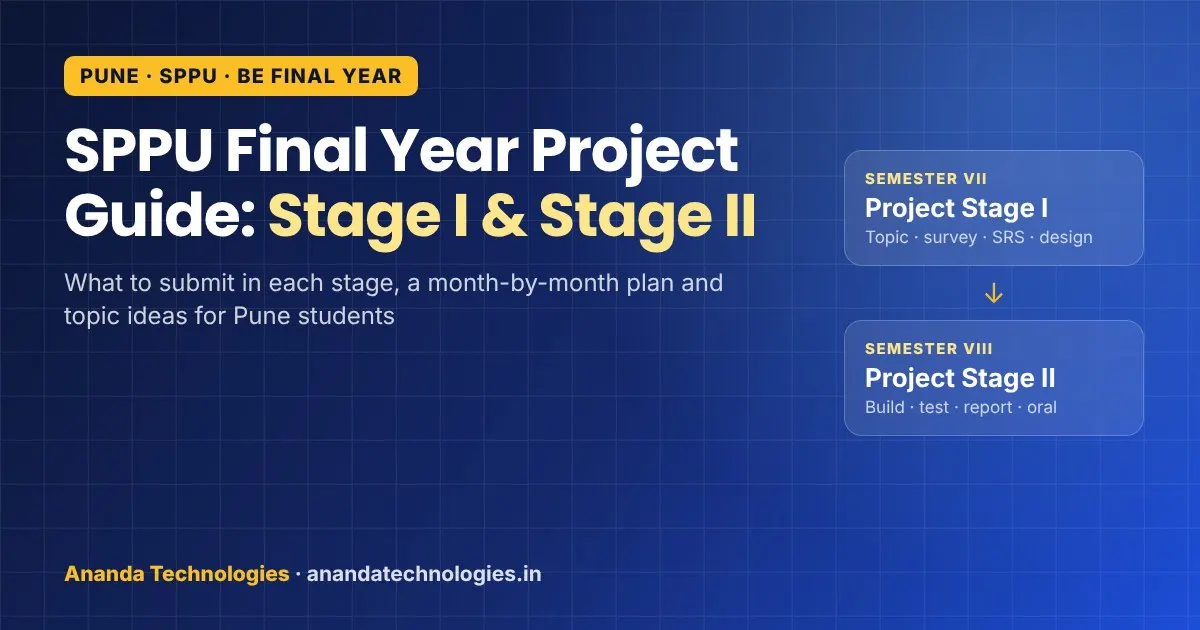
If you are in the final year of BE at a Pune or Pimpri-Chinchwad college, your project is spread across the whole year in two parts: Project Stage I in semester VII and Project Stage II in semester VIII. Students who understand this structure early get through both reviews calmly. Students who don't usually end up changing topics in December and rushing the demo in April.
This guide explains how the SPPU project works, what to finish in each stage, how to pick a topic your guide will accept, and how to prepare for the final oral.
How the SPPU BE project is structured
For BE Computer Engineering (2019 course), the SPPU syllabus lists the project like this:
| Semester | Course | Credits | Marks |
|---|---|---|---|
| VII | 410248 – Project Stage I | 2 | Term work 50 |
| VIII | 410256 – Project Stage II | 6 | Term work 100 + Oral 50 |
IT, AI & DS and other branches follow the same two-stage pattern with their own course codes, so check your branch syllabus once. The important point is visible in the table: Stage II carries three times the credits of Stage I and is the only stage with an oral exam. Stage I is where you plan; Stage II is where you prove the project works and that you understand it.
Stage I (semester VII): plan the project
Most Pune colleges expect these by the end of Stage I:
- Group and guide – form your group and get a guide allotted in the first weeks.
- Problem statement and abstract – one clear problem, who it helps, and what the system will do.
- Literature survey – 8–15 papers or existing systems and what is missing in them.
- SRS – functional and non-functional requirements, hardware and software needed.
- Design – architecture, DFD / UML diagrams and the database design.
- Stage I report and presentation – your term work marks come from this.
The mistake many groups make is choosing a topic in Stage I that nobody in the group can actually build. Your Stage I design must match the system you will show in Stage II.
Stage II (semester VIII): build, test and defend
Stage II is about a working system:
- Implementation of every module promised in Stage I
- Testing – test cases with expected and actual results
- Screenshots and results for the report
- The final report (the "black book" in many colleges), printed in your college's format
- Demo and oral exam in front of the internal guide and an external examiner
In the oral, examiners rarely ask you to recite theory. They open a screen and ask "Where is this saved?", "What happens if two users do this at the same time?" or "Show me the code for this button." If you understand the flow of data from the screen to the database and back, you can answer most of these.
A simple month-by-month plan
Colleges set their own review dates, so treat this as a rough guide:
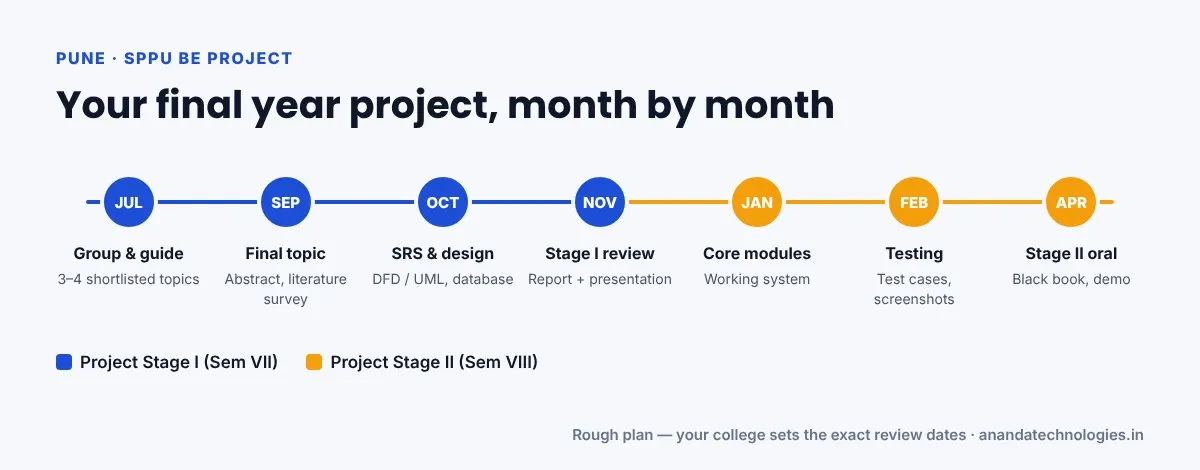
| When | What to finish |
|---|---|
| July–August | Group, guide, 3–4 shortlisted topics |
| September | Final topic, abstract, literature survey |
| October–November | SRS, design diagrams, Stage I report and review |
| December–January | Core modules working |
| February | Remaining modules, testing, screenshots |
| March–April | Final report, demo practice, Stage II oral |
How to choose a topic your guide will accept
Guides at SPPU colleges usually look for three things:
- A real user and a real problem – "students", "patients" or "small shop owners" is better than a vague "users".
- Something beyond simple CRUD – a recommendation, a prediction, a QR flow, live tracking or role-based panels makes a project look final-year level.
- A scope your group can finish – four solid modules beat ten half-done ones.
If you are confused between technologies, our guide on how to choose a final year project walks through it step by step.
Topic ideas that work well for Pune students
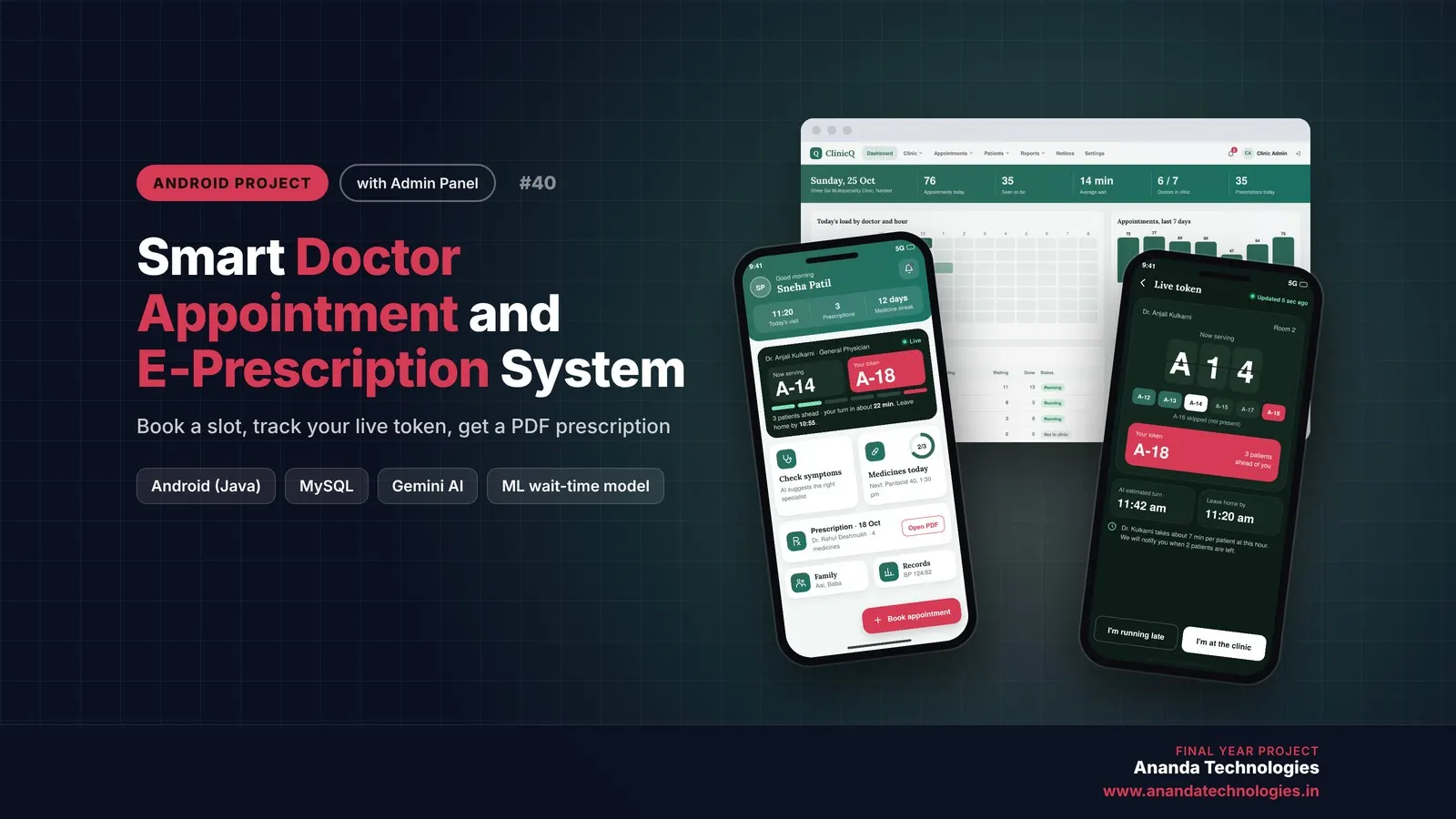
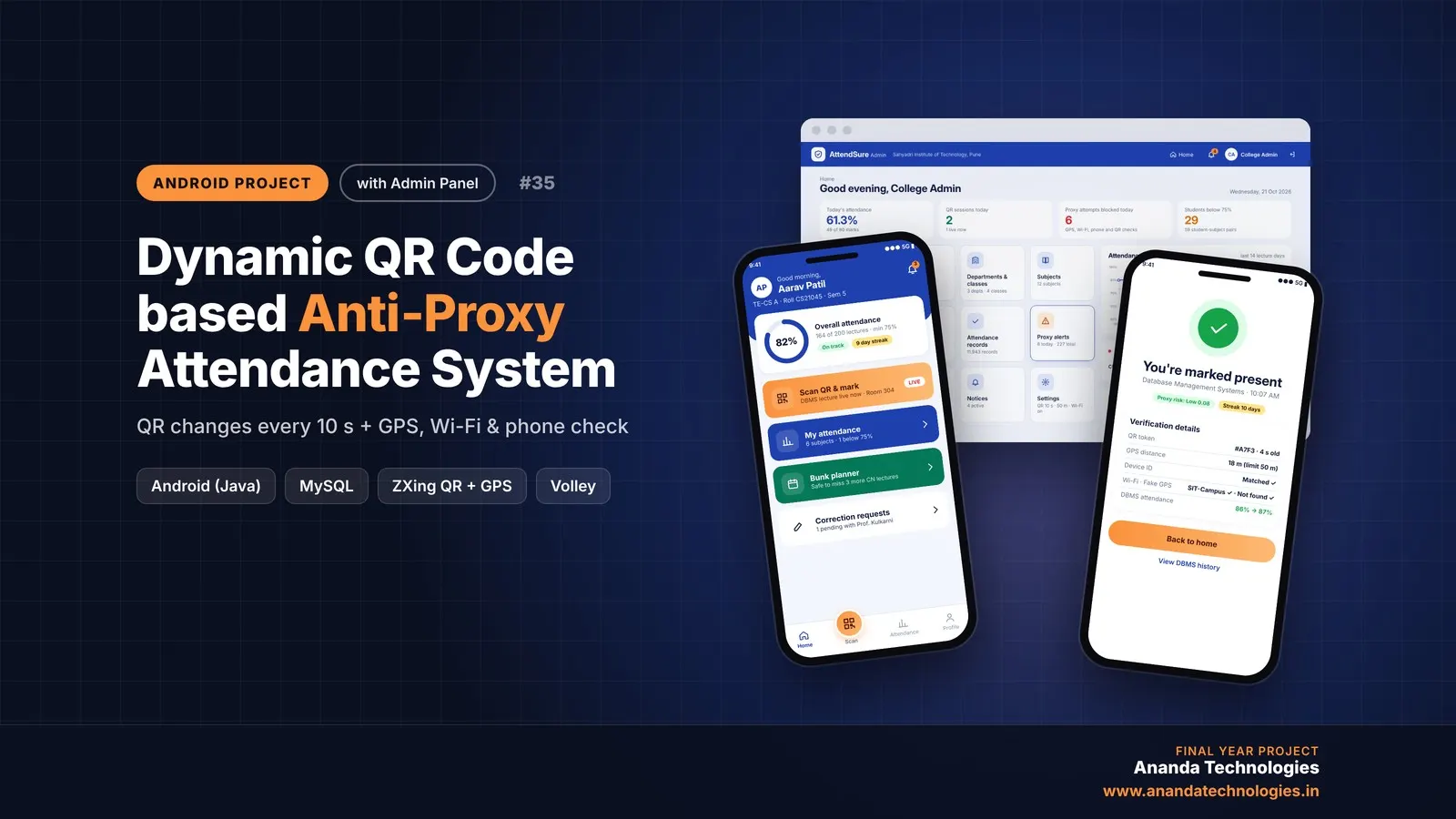
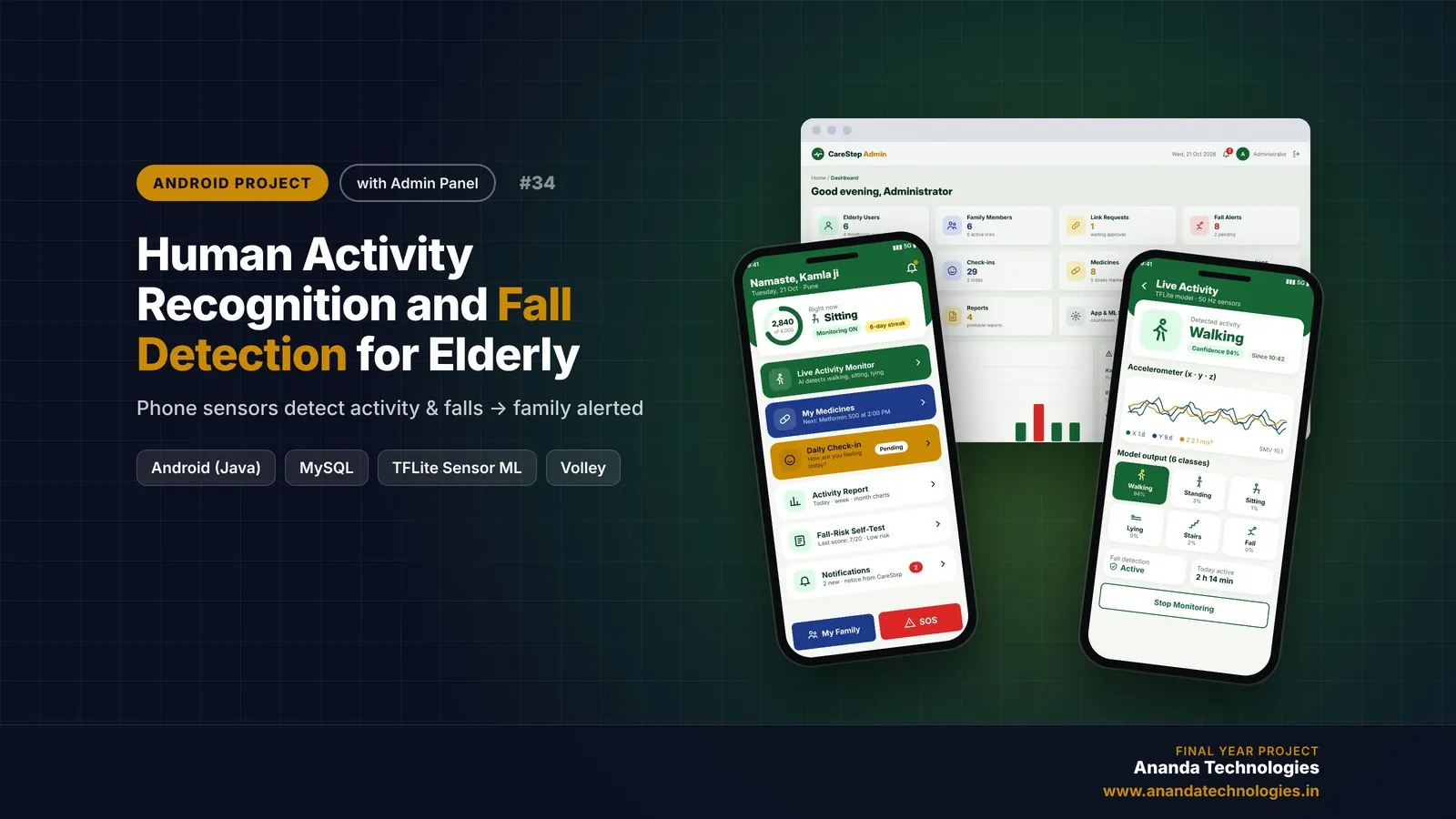
Pune students often target IT-sector jobs and internships, so projects that show practical, job-ready skills make a good impression. A few examples from our catalogue:
Android + AI / ML
- AI-based Career Guidance and Course Recommendation – recommends courses from a student's interests and marks.
- Student Performance Prediction and Early Warning – flags students who may fail before the exam.
- Spam SMS and Phishing URL Detection – a security-focused ML project that is easy to demo.
- AI-based Smart Travel Itinerary Planner – builds day-wise plans from budget and interests.
PHP + MySQL web portals
- TaskOrbit – Team Task Tracker with Kanban Board – close to the tools used in IT companies.
- CareerCanvas – Online Resume Builder – useful for placement season too.
- HireBridge – Campus Placement & Internship Portal – built around the campus recruitment and internship flow.
- HomeSphere Pro – Real Estate Property Portal – a full property listing portal with an admin side.
For more, see the final year project ideas for 2026.
MCA, BCA and diploma students in Pune
- MCA and BCA (SPPU) – the same rules apply: a working system, a proper report and a viva. A PHP or Android project with a clear admin panel is usually the right size.
- Polytechnic diploma (MSBTE) – diploma students have a capstone project in the final year and micro projects in each semester. Free solved practicals are also available in our study material.
Getting help without losing the learning
Some groups build everything from scratch; others start from a ready project and spend their time understanding and extending it. Either way, what matters in the Stage II oral is that you can explain it.
If you want a working project with source code, a complete report and a one-to-one setup on Google Meet, see final year projects for Pune students. Every project page shows a free abstract and report preview, so you can discuss the topic with your guide before deciding.
Frequently asked questions
What is Project Stage I in SPPU?
Project Stage I is the semester VII part of the BE project. You fix the topic, do the literature survey, write the SRS and design, and submit a report and presentation for term work.
How many marks does SPPU Project Stage II carry?
For BE Computer Engineering (2019 course), Project Stage II carries 6 credits with 100 marks of term work and 50 marks of oral. Check your own branch syllabus for exact figures.
Can I change my topic between Stage I and Stage II?
Some guides allow it, but you then have to redo the survey and design in semester VIII. It is much safer to choose a topic in Stage I that your group can actually build.
Which technologies are good for an SPPU final year project?
Android with AI or ML, Python machine learning and PHP with MySQL web portals all work well, as long as the project solves a clear problem and every member can explain it.