Final Year Projects
SPPU BCA Final Year Project Guide: Report Format, Marks and Topic Ideas
A practical guide for TY BCA students at SPPU colleges in Pune: how the project lab works, report format, marks split, topic ideas and a semester plan.
5 min read · updated
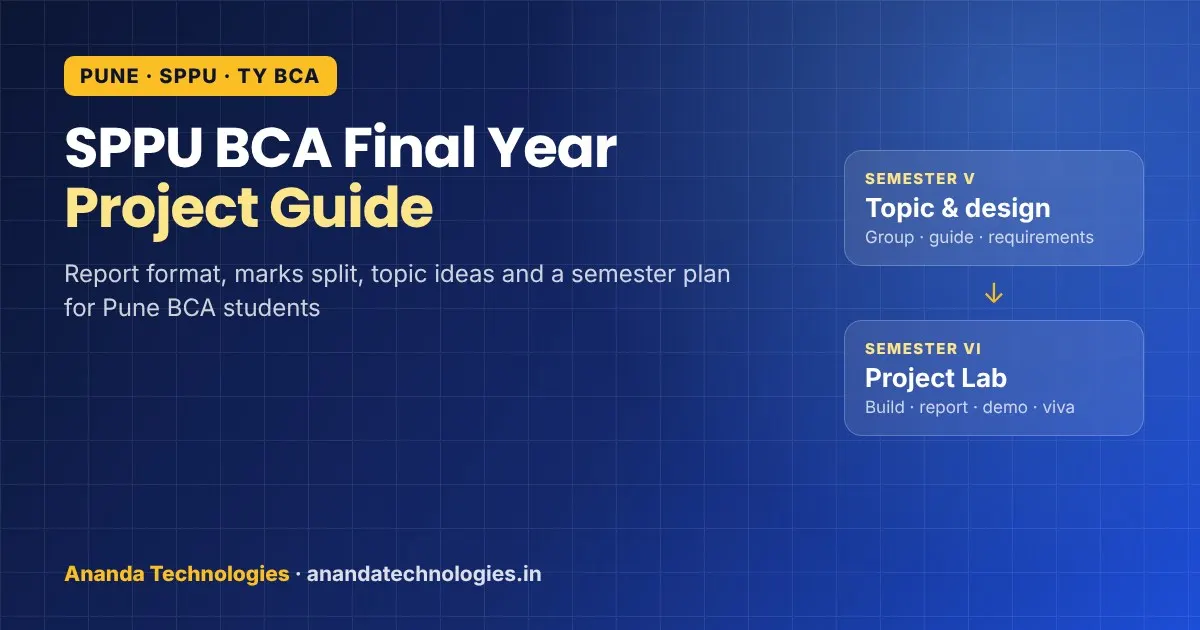
If you are in the third year of BCA at an SPPU college in Pune, the final year project is the one subject where you build something from start to finish. It carries its own marks, needs a proper report, and ends with a demonstration and viva in front of an examiner. This guide explains how the SPPU BCA project has been structured, what goes into the report, how marks are given and how to choose a topic you can finish without stress.
Which SPPU syllabus applies to you?
SPPU has two BCA syllabus patterns running in colleges right now:
- 2019 CBCS pattern – the TY BCA syllabus that colleges have followed for the last few batches.
- 2024 pattern (NEP) – started with first-year students in 2024-25. Its first and second year syllabi are published; the third-year structure is released by the university separately.
Your batch decides your pattern, so confirm the project course code and marks with your department. The good news is that the work itself – a real, working application with a report and viva – is the same idea in both. The details below come from the last published SPPU TY BCA syllabus (2019 CBCS), which is the best guide to what examiners expect.
The project in the TY BCA syllabus
In the 2019 CBCS TY BCA syllabus, the project appears in Semester VI as BCA368 – DSE VI Project Lab, a practical course of 2 credits and 50 marks, with 4 lab hours a week.
| Item | What the syllabus says |
|---|---|
| Group size | Not more than three students |
| Topic | Chosen with your guide, project in-charge and HOD |
| Type | Application, web, database or research based – but it must be implemented |
| Technology | Language, platform and tools chosen with the guide |
| Progress | Guide tracks your work every week |
| Planning tool | Gantt Project suggested for planning and monitoring |
A purely theoretical study is not accepted. You must show a working system.
How the 50 marks are split
| Part | Marks |
|---|---|
| Continuous evaluation (progress report) | 15 |
| End-semester exam – presentation and project report | 15 |
| End-semester exam – demonstration of the project | 15 |
| End-semester exam – viva | 5 |
| Total | 50 |
Two things stand out. First, 15 marks come from continuous evaluation, so regular progress with your guide matters, not just the last week. Second, the demonstration alone is worth as much as the report, so your project must actually run on the exam day.
A certified project report is mandatory to appear for the project exam, so plan time for signatures.
What goes into the SPPU BCA project report
The syllabus lists these sections for the report, which is submitted spiral bound to your guide and the college:
- Title page
- Certificate
- Index page
- Title
- Introduction
- Requirement specification
- System design details
- System implementation
- Results
- Conclusion and future scope
- References
In practice, "system design details" is where your ER diagram, DFD, use case diagram and database tables go, and "results" is where you add screenshots with a short explanation of each screen. Keep the diagrams consistent with the actual software – examiners do check.
For more on how Pune engineering colleges handle Stage I and Stage II, see our SPPU final year project guide.
Choosing a topic that fits BCA
BCA projects are judged on whether you understand and can demonstrate what you built. A good topic for SPPU BCA usually has:
- Clear users and roles – for example student, admin and staff.
- A real database – tables you designed and can explain.
- 3 to 6 main modules – enough to show work, small enough to finish.
- A stack you studied – PHP with MySQL, Java, Android or Python all fit the BCA syllabus.
Project ideas that suit BCA students
These projects from our catalogue each have a free abstract, screenshots and a report preview you can check:
- Hostel room allotment and mess portal – rooms, allotment, mess and admin panel. A familiar problem for Pune students living in hostels.
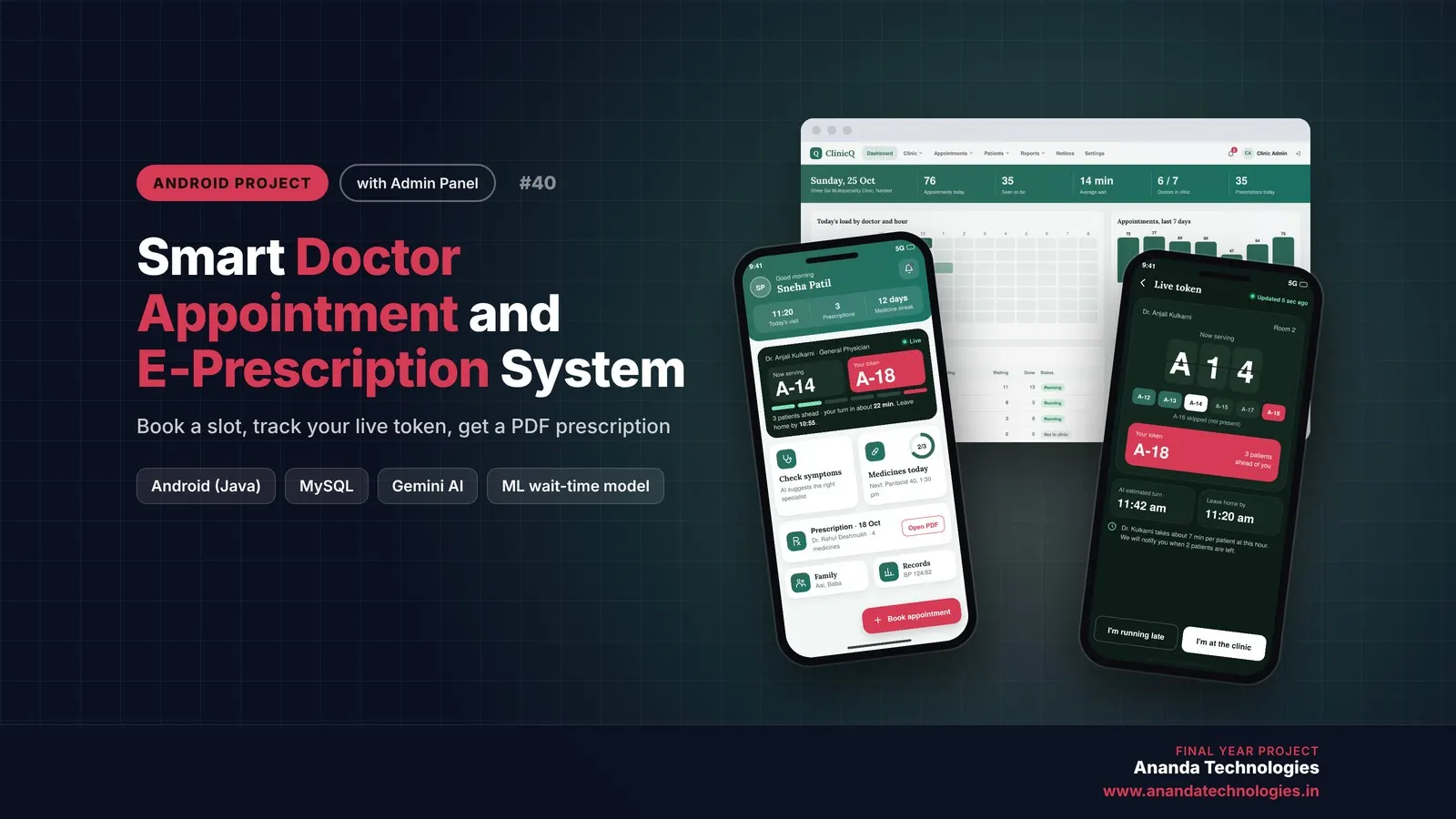
- Doctor appointment system with OPD token – patients, doctors and admin with token-based booking.
- Online exam system with proctoring – question bank, timed tests and results.
- Library seat booking system – seat slots and bookings for study libraries.
- Turf booking system – slot booking and payments for sports turfs.
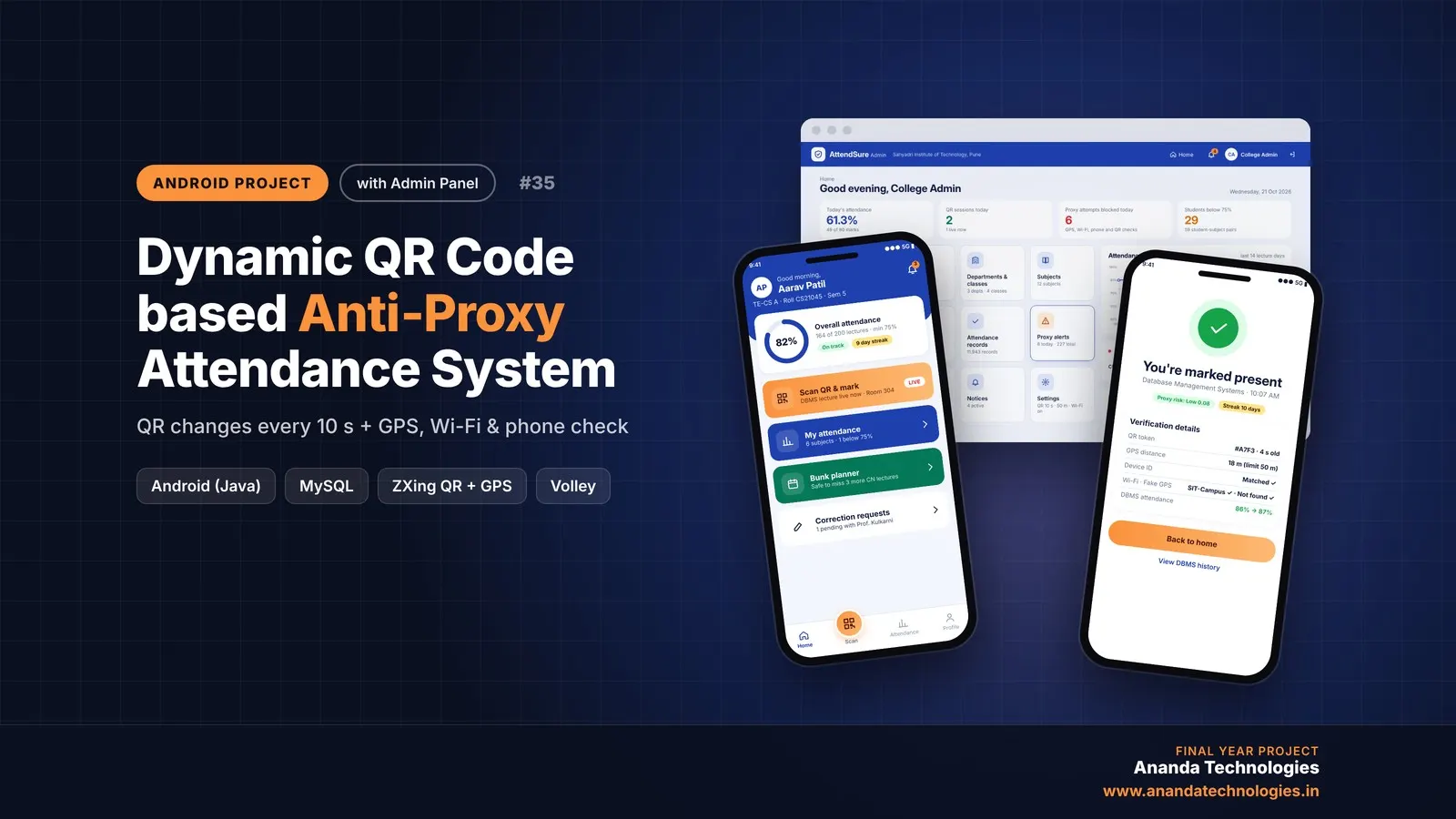
- Anti-proxy QR attendance (Android) – dynamic QR codes to stop proxy attendance.
- AI timetable generator (Android) – automatic timetables for teachers and classes.
You can browse more in BCA projects, PHP projects and Android projects.
A semester plan for SPPU BCA students
| When | What to finish |
|---|---|
| Start of Semester V | Form your group, shortlist 2–3 topics, meet the guide |
| End of Semester V | Topic approved, requirements written, basic design ready |
| Weeks 1–4 of Semester VI | Database and main modules working |
| Weeks 5–8 | All modules done, testing, screenshots |
| Weeks 9–10 | Report written and certified |
| Before the exam | Project set up on the lab PC, demo rehearsed, viva practice |
Even if your college starts the project only in Semester VI, use Semester V to decide the topic. The weekly progress marks reward an early start.
Five things SPPU BCA examiners notice
- Can every member explain the project? Groups of three are allowed, but each person must answer questions on their part.
- Does the demo run smoothly? Test on the lab computer, not only your laptop.
- Do the diagrams match the database? An ER diagram with tables that do not exist is an easy catch.
- Is there real data? A few sample records in every table make the demo believable.
- Is the report certified and complete? Without it you cannot appear for the exam.
Our post on how to choose a final year project has a simple checklist to compare topics before you finalise one.
Help for BCA students in Pune
If you study BCA at an SPPU college in Pune, Pimpri-Chinchwad or nearby, our final year projects in Pune page lists projects that fit SPPU requirements. Every project comes with source code, database, an editable report you can adapt to your college format, and a setup guide. You can read the free abstract, screenshots and report preview before you decide.
Whatever you choose, start early, keep the scope realistic and make sure your project runs on the exam day.
Frequently asked questions
How many students can be in an SPPU BCA project group?
The last published SPPU TY BCA syllabus (2019 CBCS) allows not more than three students in a group. Confirm with your college, as the 2024 (NEP) batches follow their own syllabus.
How are marks given for the SPPU BCA project?
In the 2019 CBCS TY BCA syllabus, the Project Lab carries 50 marks: 15 for continuous evaluation and 35 in the end-semester exam (15 for presentation and report, 15 for the demonstration and 5 for the viva).
What chapters should the SPPU BCA project report have?
The syllabus lists a title page, certificate, index, introduction, requirement specification, system design details, system implementation, results, conclusion and future scope, and references. Your college may add its own format on top.
Which technology should I use for my BCA project?
The syllabus lets you choose the language, platform and tools with your guide. PHP with MySQL, Java, Android and Python all fit the BCA syllabus. Pick the one your group can explain confidently in the viva.