Final Year Projects
BSc IT Final Year Project Guide for Mumbai University (Sem V & VI)
A practical guide for TYBSc IT students at Mumbai University: how Project Dissertation (Sem V) and Project Implementation (Sem VI) work, black book chapters, exam-day rules and topic ideas.
6 min read · updated
If you are in TYBSc IT at a Mumbai University college, your final year has one subject that is very different from the rest: the project. In Semester V you plan it and in Semester VI you build it, write the black book and face the external examiner. This guide explains how the two semesters fit together, what the university expects on the exam day, and how to pick a topic you can actually finish on time.
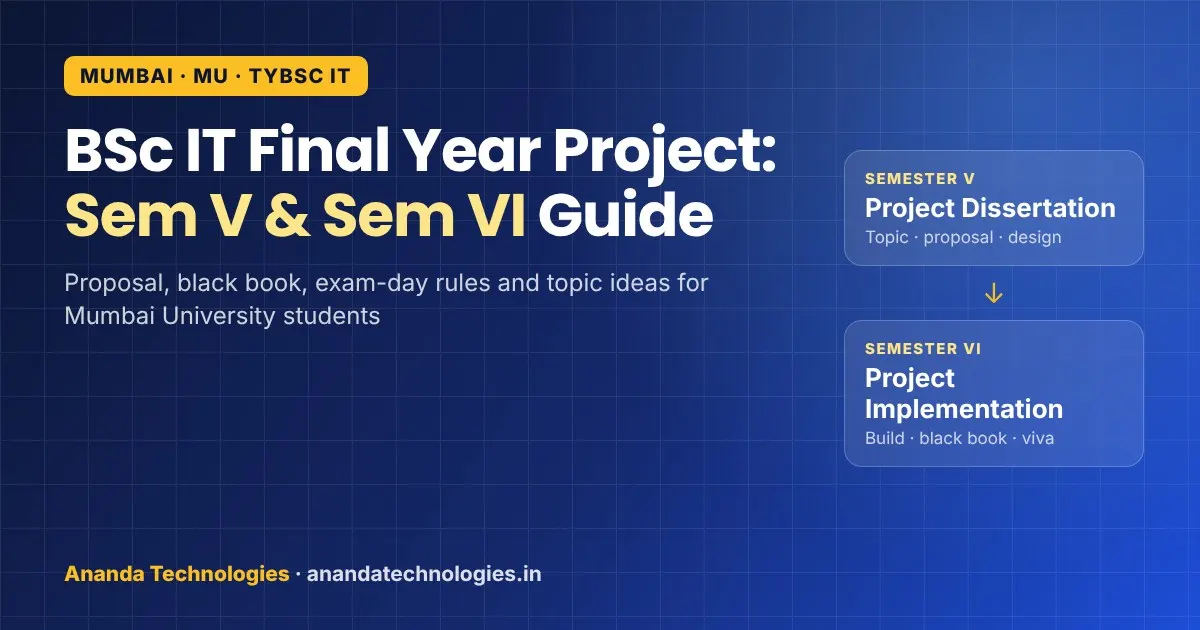
How the BSc IT project is split across Semester V and VI
Under the revised TYBSc IT syllabus that Mumbai University introduced from the 2024-25 academic year, the project appears as two separate courses:
| Semester | Course | Credits | What you do |
|---|---|---|---|
| Semester V | Project Dissertation (USIT5P1) | 2 | Choose the topic, get the proposal approved, analyse and design the system |
| Semester VI | Project Implementation (USIT6P1) | 2 | Build, test and document the system, then present it in the external exam |
Course codes can look different in autonomous colleges (some use their own codes), so always confirm with your department. What stays the same everywhere is the idea: Semester V is planning, Semester VI is building. Students who treat Semester V as "just a synopsis" usually end up writing code in a hurry in March.
Semester V: the Project Dissertation
The goal of Semester V is a clear, approved plan. In most Mumbai colleges this means:
- Pick a topic with your guide and form your group (check your college for the allowed group size).
- Submit the project proposal for approval. Your college will have its own proposal form; the guide signs it.
- Do the analysis and design: problem statement, objectives, scope, requirements, and diagrams such as ER diagram, DFD, use case and class diagrams.
- Prepare the Semester V documentation that your college asks for.
Keep the scope small enough to finish. "Online shopping site like Amazon" is too wide; "college canteen pre-order system with pickup slots" is clear and buildable.
Semester VI: Project Implementation
This is where the real marks are. You turn the Semester V design into a working application, test it, and complete the black book.
What happens on the exam day
Mumbai University's examination notice for the BSc IT Semester VI Project Implementation exam (November 2024) gives a good picture of what the day looks like:
- Each candidate gets about 15–20 minutes with the examiners.
- You are evaluated on the demonstration of the project, presentation, quality of the project and viva-voce.
- You must bring a certified original copy of your project documentation with your exam seat number on the cover.
- In a group project, every member needs a complete, separately certified copy of the documentation.
- You need at least 40% marks in project evaluation and viva to pass.
- The project should be set up in the lab in advance, with the consent of the expert or your internal guide.
Exam dates and session timings change every year, so follow the notice your college shares for your batch.
Common black book structure
Many Mumbai University colleges follow a black book layout like this. Your college's format always wins, so check it first:
- Title page, approved proposal, certificate, declaration, abstract, acknowledgement, contents
- Chapter 1 – Introduction (background, objectives, scope)
- Chapter 2 – Survey of Technologies (why you chose your language, database and tools)
- Chapter 3 – Requirements and Analysis (problem definition, requirement specification, planning and scheduling)
- Chapter 4 – System Design (ER diagram, DFD, UML diagrams, database tables)
- Chapter 5 – Implementation and Testing (code approach, test cases)
- Chapter 6 – Results and Discussion (screenshots with explanation)
- Chapter 7 – Conclusions and future scope
- References and appendices
For a deeper look at the report and the Major Project format used in Mumbai engineering colleges, read our Mumbai University Major Project guide.
How to choose a BSc IT project topic that works in Mumbai
A good BSc IT project solves a small, real problem you can explain in two minutes. A few filters help:
- You can explain every module. The viva is about your understanding, not the number of pages.
- The stack matches your syllabus. PHP + MySQL, Java/Android, Python or ASP.NET are all common choices. Pick the one your group is most comfortable with.
- It runs on a lab computer. Test the full setup on another machine before the exam.
- It has a local angle. Mumbai life gives great problems: housing society complaints, PG and hostel search for outstation students, canteen queues, local scams by SMS.
Topic ideas that fit the BSc IT level
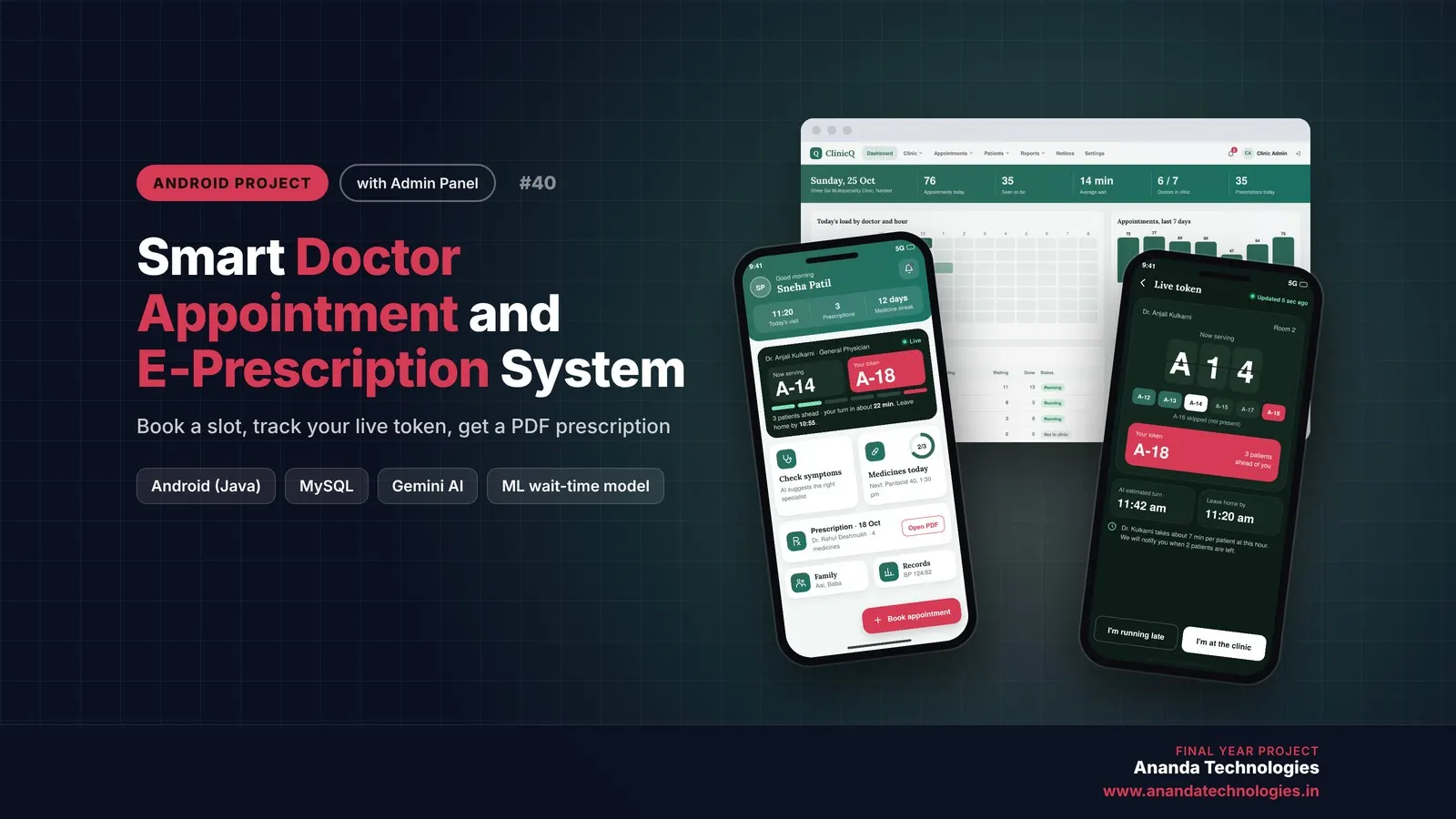
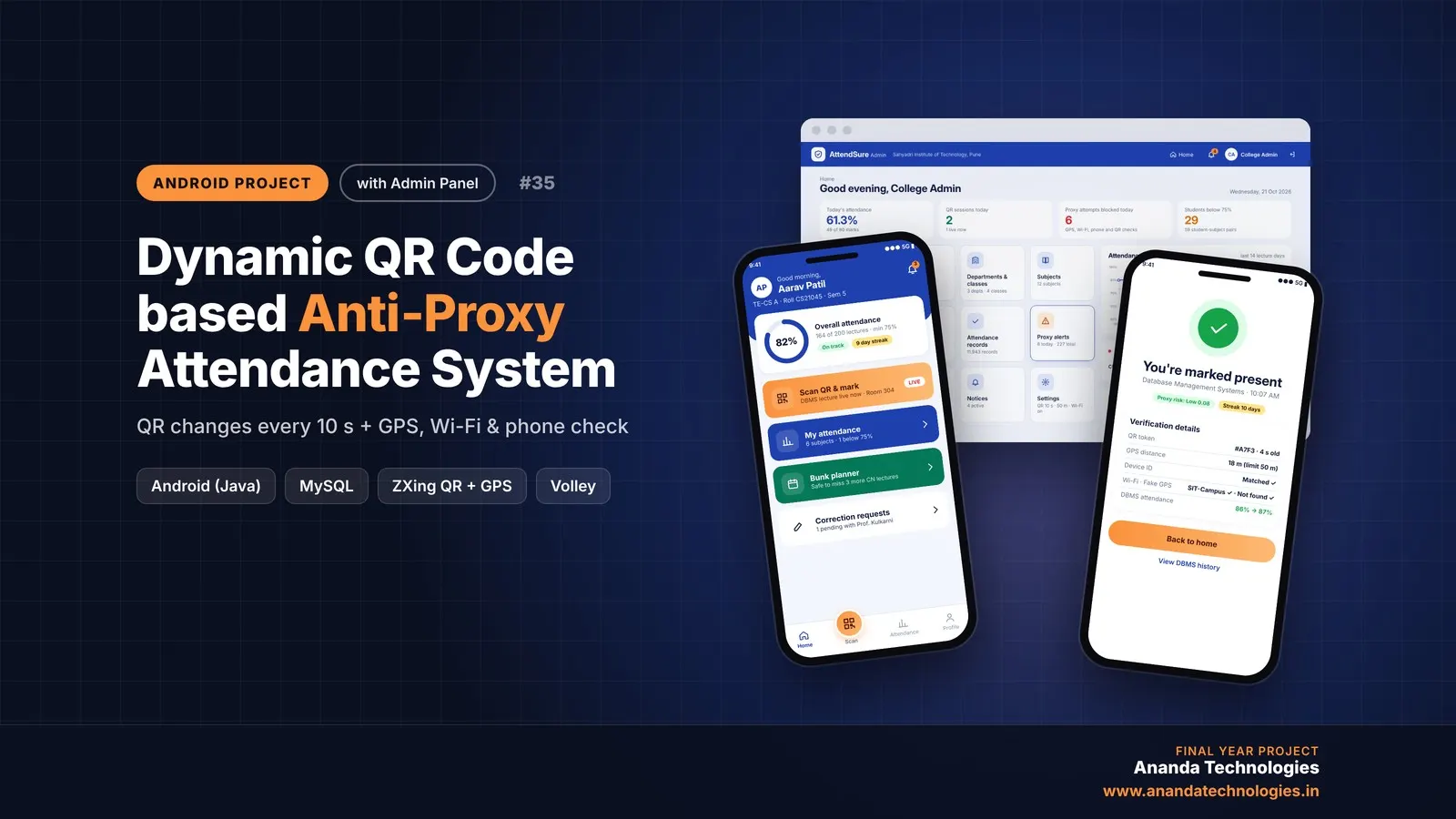
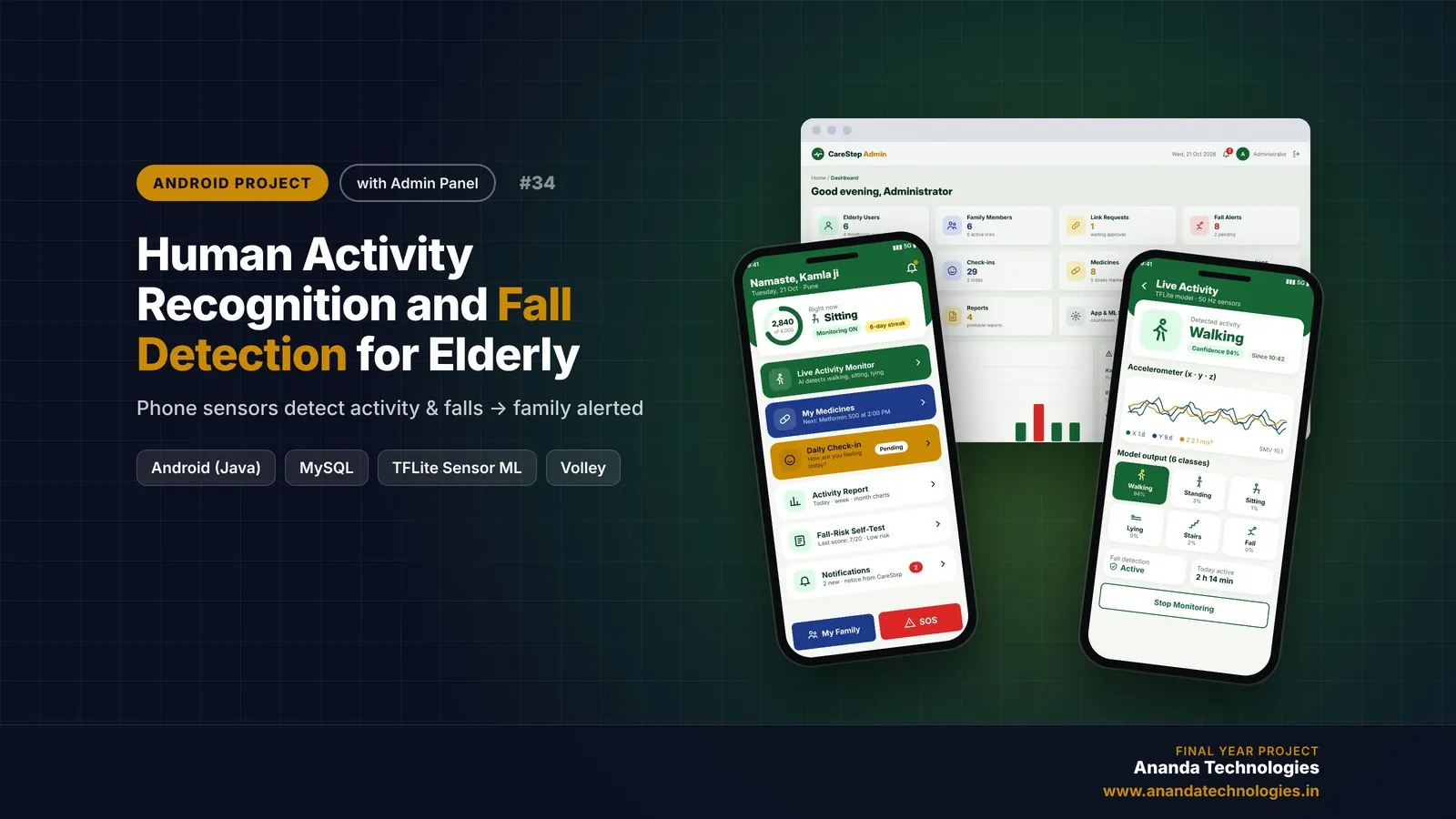
Here are some ideas from our catalogue, each with an abstract, screenshots and a sample report preview you can check:
- Society complaint and notice portal (PHP) – complaints with photos, status timeline, notices and maintenance bills. Very relatable for housing societies.
- PG and hostel finder (PHP) – filters, bed availability and visit booking for students coming to the city.
- College canteen food ordering system (PHP) – pre-order with pickup slots and a kitchen board.
- Campus placement portal (PHP) – eligibility check, application tracking and admin panel.
- Spam SMS and phishing URL detection (Android) – a machine learning project with a clear social use.
- Fake news detection using machine learning (Android) – on-device ML with a fact-checker review flow.
- Restaurant QR table ordering system (Android + PHP) – QR menu, kitchen order board and GST bill.
You can browse more in PHP projects, Android projects and AI/ML projects. If you are still unsure, our post on how to choose a final year project walks through the decision step by step.
A simple timeline for TYBSc IT students
| When | What to finish |
|---|---|
| Start of Semester V | Group, topic, guide meeting |
| Mid Semester V | Proposal approved, requirements written |
| End of Semester V | Design diagrams and Semester V documentation |
| Start of Semester VI | Database and core modules working |
| Mid Semester VI | All modules done, testing, screenshots |
| Before the exam | Black book printed and certified, project set up on the lab PC, viva practice |
Five mistakes that cost BSc IT students marks
- Copying a project you cannot explain. Examiners ask "why did you use this table?" or "show me this code". Understand everything you submit.
- Diagrams that do not match the software. If your ER diagram has 8 tables and the database has 5, the examiner will notice.
- No testing chapter. Even simple test cases (input, expected output, actual output) show discipline.
- Leaving printing to the last week. Certification needs your guide's and HOD's signatures; plan for it.
- Not testing on the lab PC. A project that works only on your laptop is a risk on exam day.
Help for BSc IT students in Mumbai
If you are a BSc IT, BCA or engineering student in Mumbai, Thane or Navi Mumbai, our final year projects in Mumbai page lists projects that suit Mumbai University requirements. Every project comes with source code, database, a full report you can adapt into your black book, and a setup guide. You can check the free abstract, screenshots and report preview before you decide.
Whatever you choose, start early in Semester V, keep the scope realistic, and make sure every member of the group can explain the project on their own.
Frequently asked questions
How many credits is the BSc IT final year project at Mumbai University?
Under the revised TYBSc IT syllabus from 2024-25, Project Dissertation in Semester V and Project Implementation in Semester VI carry 2 credits each. Autonomous colleges may use their own course codes, so confirm with your department.
What do I need to bring for the Semester VI project exam?
Mumbai University's exam notice asks for a certified original copy of your project documentation with your seat number on the cover. In a group project, every member needs a separate certified copy.
How long is the BSc IT project viva at Mumbai University?
The university's notice gives each candidate about 15–20 minutes, covering the demonstration, presentation, project quality and viva-voce. You need at least 40% to pass.
Can I use PHP, Android or Python for my BSc IT project?
Yes. Mumbai colleges commonly accept PHP with MySQL, Java or Android, Python and ASP.NET projects. Pick the stack your group understands best and confirm it with your guide when the proposal is approved.