Final Year Projects
Mumbai University Major Project I & II: A Practical Guide for Final Year Students
How Major Project I and II work under the University of Mumbai, what each stage needs, black book tips, a plan that fits a Mumbai schedule and viva-friendly topics.
4 min read · updated
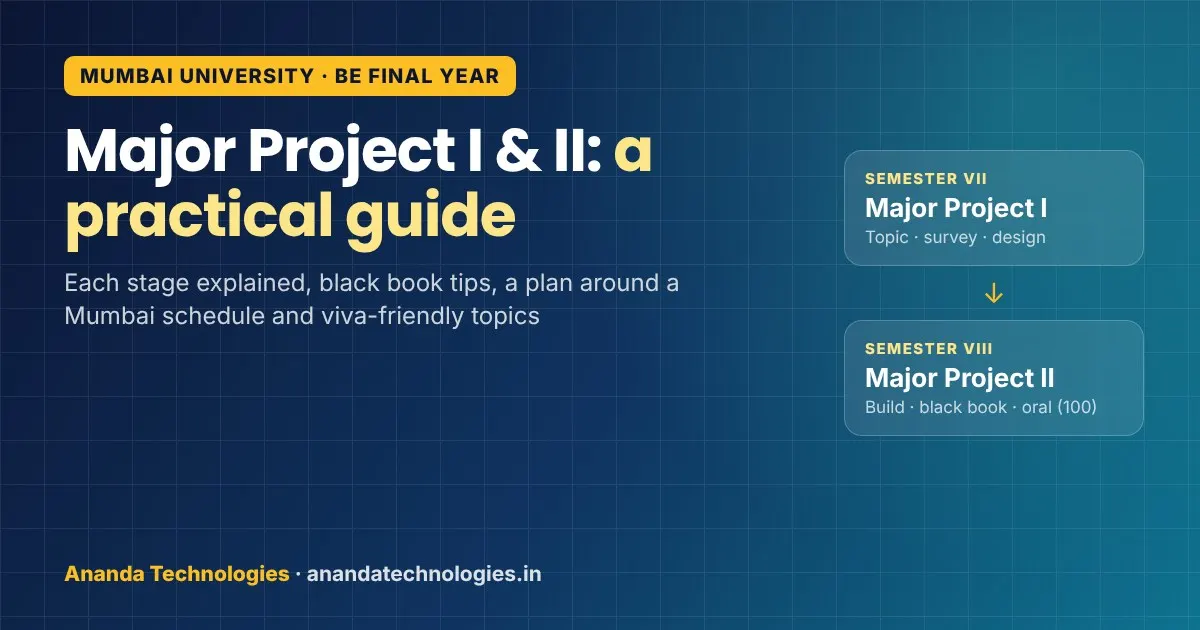
Final year at a Mumbai engineering college is busy: lectures, local trains, internships and placement tests all compete for time. On top of that, the University of Mumbai splits the project into Major Project I in semester VII and Major Project II in semester VIII. If you plan the two stages together from the start, the project becomes one of the easier parts of the year instead of the most stressful one.
This guide explains how the Mumbai University project works, what each stage needs, how to plan around a Mumbai schedule and which topics hold up well in the final oral.
How Major Project I and II are structured
Under the REV-2019 'C' scheme, the final year syllabus (shown here for B.E. Electronics & Computer Science) sets the project out like this:
| Semester | Course | Credits | Marks |
|---|---|---|---|
| VII | Major Project I | 3 | Term work 50 |
| VIII | Major Project II | 6 | Term work 50 + Oral 100 |
Computer, IT and other branches follow the same two-part structure with their own course codes, so confirm the details in your branch syllabus. Two things stand out:
- Major Project II has the oral, worth 100 marks – more than everything in Major Project I.
- The syllabus allows groups of 2 to 4 students, so every member is expected to explain part of the work.
Major Project I (semester VII): fix the topic and design
By the end of semester VII, most Mumbai colleges expect:
- Topic and abstract approved by your guide
- Literature survey of existing systems and research papers
- Requirements – what the system must do and what it needs to run
- Design – block diagram, UML / DFD, database tables
- Partial implementation – many colleges like to see the first module working
- Presentation and report for term work
Pick a topic you can still be proud of in April. Changing the topic between Major Project I and II means redoing the survey and design in your busiest semester.
Major Project II (semester VIII): finish, test and present
- Complete every module and connect them end to end
- Test the system and record results
- Write the final report – in most Mumbai colleges this is the black book, printed in the college template with certificate, acknowledgement and index pages
- Practise the demo until any member of the group can run it
- Face the oral with your internal guide and the external examiner
Examiners in Mumbai often check whether each member understands the project. Divide the modules so everyone owns one part and can explain its screens, code and tables.
Planning around a Mumbai schedule
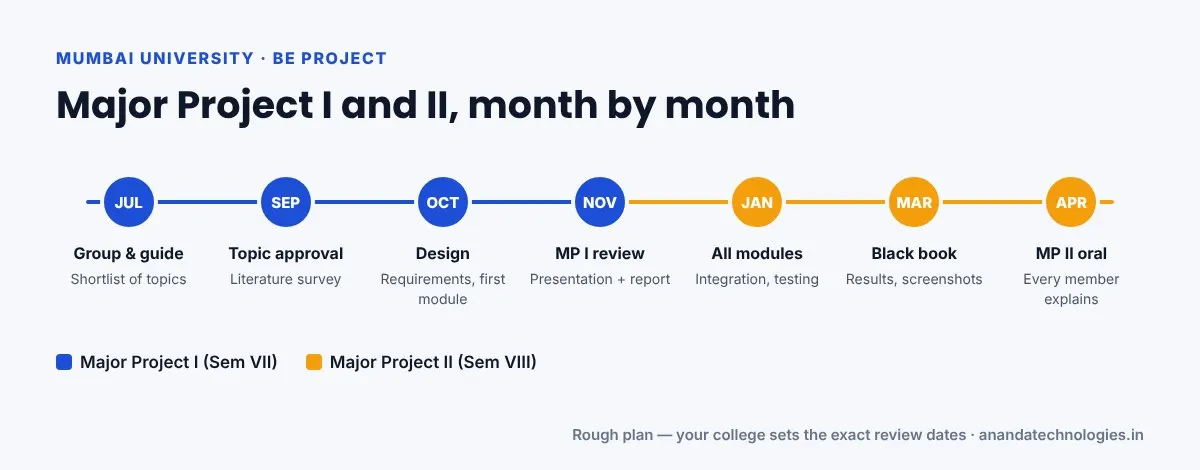
Long travel time is the reality for many students in Thane, Kalyan, Vasai-Virar or Panvel, so plan the project for short, regular sessions rather than weekend marathons:
| When | Goal |
|---|---|
| July–August | Group, guide, shortlist of topics |
| September | Topic approval, literature survey |
| October | Requirements, design, first module |
| November | Major Project I presentation and report |
| January–February | Remaining modules, integration, testing |
| March | Black book, results, screenshots |
| April | Demo practice and Major Project II oral |
A shared Git repository and one weekly online call keep a group moving even when members live far apart.
Topics that hold up well in a Mumbai viva
Projects linked to safety, health and everyday city life are easy to explain and connect well with examiners. Some examples:
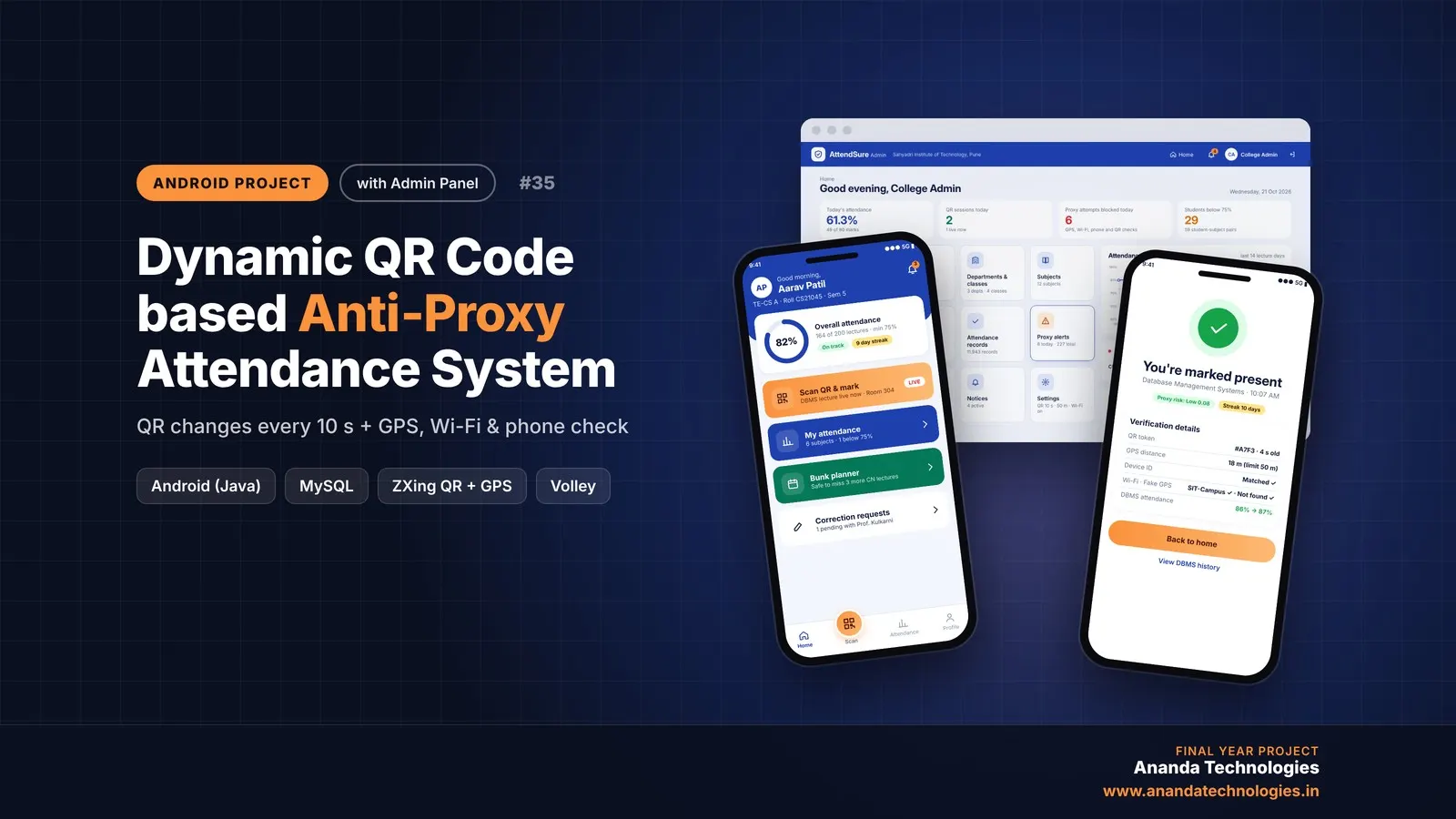
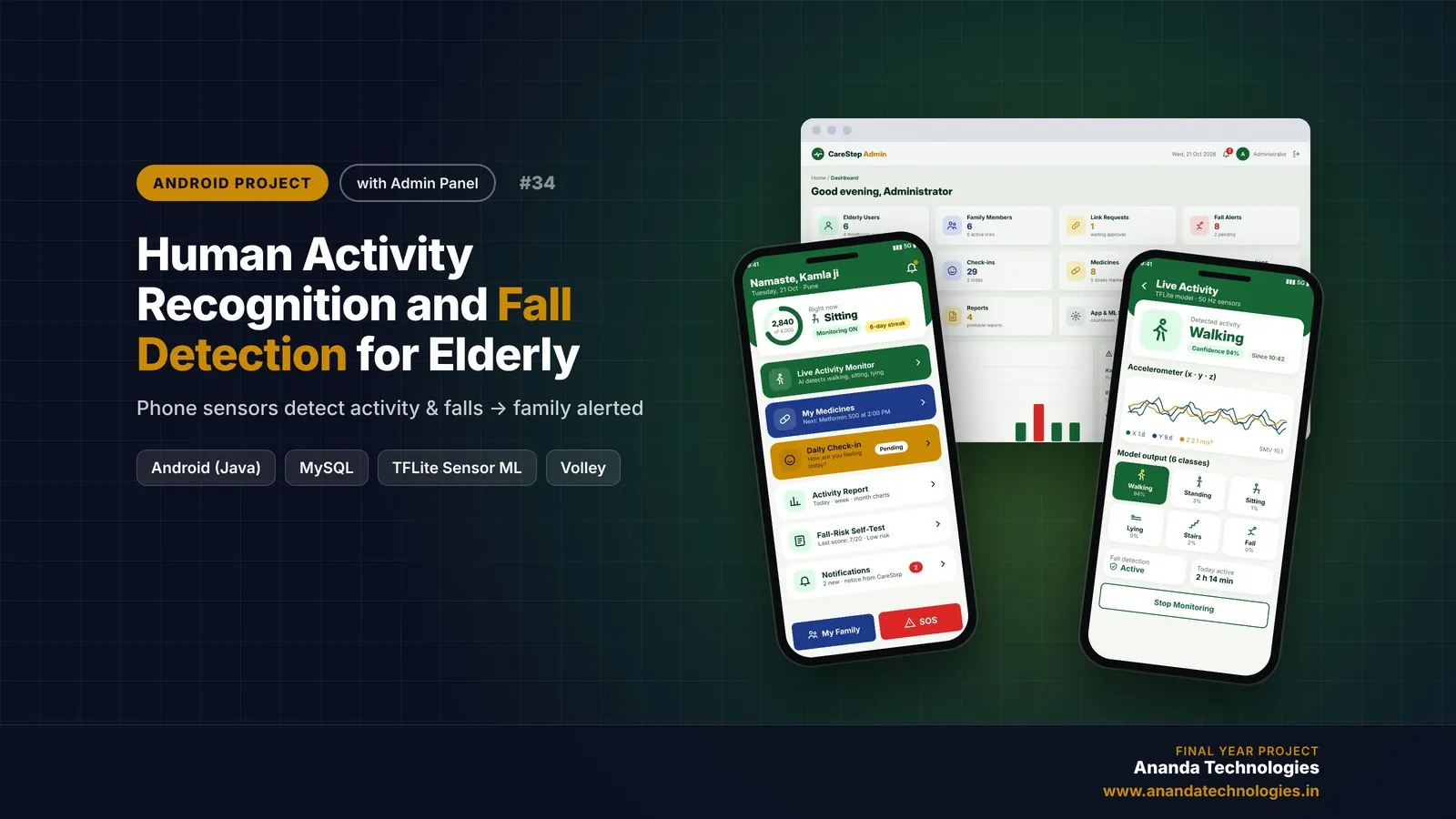
Android + AI / ML
- Women Safety SOS App with Live Tracking – SOS alerts with live location for trusted contacts.
- Road Accident Detection and Emergency Alert – detects a crash and alerts emergency contacts.
- Skin Disease Detection using CNN – an image-classification project with clear results to show.
- Prescription Scanner and Medicine Reminder using OCR – reads a prescription and sets reminders.
- AI-based Personal Finance Advisor and Expense Tracker – spending analysis with suggestions.
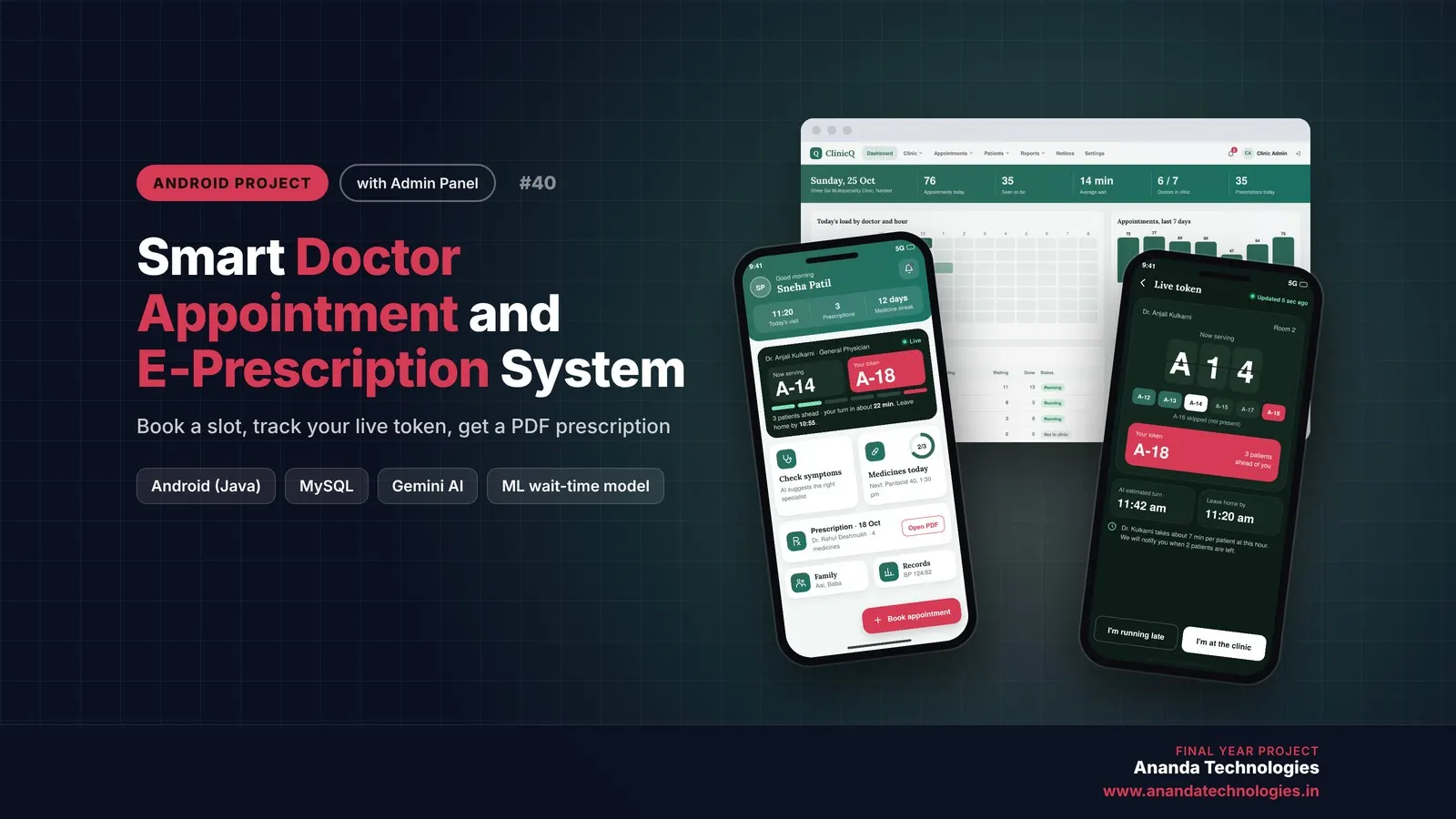
PHP + MySQL web portals
- SeatSure – Bus Ticket Booking with Seat Layout Selection – a visual seat map is great for demos.
- ScreenPass – Movie Ticket Booking System – a familiar booking flow that is easy to demo.
- FreshFold – Laundry Pickup and Delivery System – a service-booking portal with pickup and delivery tracking.
More ideas: AI projects for final year students.
BSc IT, BSc CS and MCA students in Mumbai
BSc IT and BSc CS students under the University of Mumbai also submit a final year project with documentation and a viva, and MCA students do a final project too. A PHP portal or an Android app with an admin panel is usually the right size for these courses, and the same advice applies: pick early, keep the scope realistic and know every screen.
Getting help the smart way
Whether you build from scratch or start from a ready project, the oral only goes well if every member understands the system.
If you want a working project with source code, an editable report you can move into your black book and a live setup on Google Meet at a time that suits you, see final year projects for Mumbai students. Each project page has a free abstract and report preview, so your group can check the topic before deciding.
Frequently asked questions
What is the difference between Major Project I and Major Project II?
Major Project I in semester VII covers the topic, literature survey, requirements and design. Major Project II in semester VIII is the full implementation, testing, black book and the final oral.
How many marks is the Major Project II oral?
In the REV-2019 'C' scheme syllabus for B.E. Electronics & Computer Science, Major Project II has 50 marks of term work and 100 marks of oral. Confirm the figures in your branch syllabus.
How many students can be in a Mumbai University project group?
The REV-2019 syllabus allows groups of 2 to 4 students, and each member is expected to explain part of the project.
What is the black book?
It is the name many Mumbai colleges use for the final printed project report, prepared in the college template with certificate, acknowledgement, index and all chapters.