Final Year Projects
AI Projects for Final Year Students: 12 Ideas for B.Tech, MCA, BCA & Diploma
Explore AI project ideas for B.Tech, MCA, BCA, Diploma and Polytechnic students, including chatbots, machine learning, recommendation systems and intelligent automation.
# AI Projects for Final Year Students: 12 Ideas for B.Tech, MCA, BCA & Diploma
Artificial Intelligence (AI) is becoming an important part of software development, data analysis and business automation. For students pursuing B.Tech, MCA, BCA, B.Sc. Computer Science, Diploma and Polytechnic courses, an AI project can be an opportunity to apply programming concepts to practical problems.
If you are searching for AI projects for final-year students, this guide covers 12 project ideas, their main features, suggested technologies and the skills you can learn from each project.
Whether you are a beginner exploring basic AI applications or an advanced student working on a major project, choose a topic that matches your course requirements, available time and technical experience.
1. AI-Based Admission and College Enquiry Assistant
An AI-based admission enquiry assistant helps students find information about courses, eligibility, admission procedures and college facilities.
Possible features:
- Chat interface for student enquiries
- Course and programme information
- Frequently asked questions
- Admission enquiry form
- Admin-managed information
- Optional AI-powered responses
Suggested technologies: Python or JavaScript, a backend API, a database and an AI API if required.
Suitable for: B.Tech, MCA, BCA and Diploma students.
This project is particularly useful for learning how a chatbot can retrieve information and support an enquiry workflow. Answers should be based on verified information rather than unverified AI-generated claims.
2. Student Performance Analysis System
Build an application that analyses academic records and presents useful performance summaries.
Possible features:
- Student marks and attendance records
- Subject-wise performance charts
- Identification of performance trends
- Reports for different semesters
- Optional predictive model
Suggested technologies: Python, Pandas, data visualisation libraries and a database.
Skills covered: Data analysis, database management and basic machine learning.
Use sample or authorised academic data and explain the limitations of any prediction.
3. AI-Based Resume Screening System
A resume screening application can help organise candidate profiles and compare listed skills with job requirements.
Possible features:
- Resume text extraction
- Skill identification
- Job-description matching
- Candidate filtering
- Match summaries
Suggested technologies: Python, natural language processing libraries and a database.
Suitable for: B.Tech and MCA students seeking an advanced software project.
The system should assist human review rather than make unsupported or discriminatory hiring decisions.
4. FAQ Chatbot for Educational Institutions
Develop a chatbot that answers common questions about courses, timetables, fees, examinations and campus facilities.
Possible features:
- Frequently asked questions
- Searchable knowledge base
- Category-wise questions
- Admin interface for updating answers
- Chat history, where appropriate
Suggested technologies: Python or JavaScript, a database and optional language-model integration.
A rule-based FAQ chatbot is a manageable starting point. AI-based responses can be added after the basic information system works reliably.
5. Movie or Book Recommendation System
Create an application that recommends movies or books based on user preferences or item similarity.
Possible features:
- Search and browse items
- User ratings
- Recommendation lists
- Genre-based filtering
- Recommendation history
Suggested technologies: Python, Pandas, scikit-learn and a suitable dataset.
Skills covered: Data preprocessing, similarity measures and recommendation algorithms.
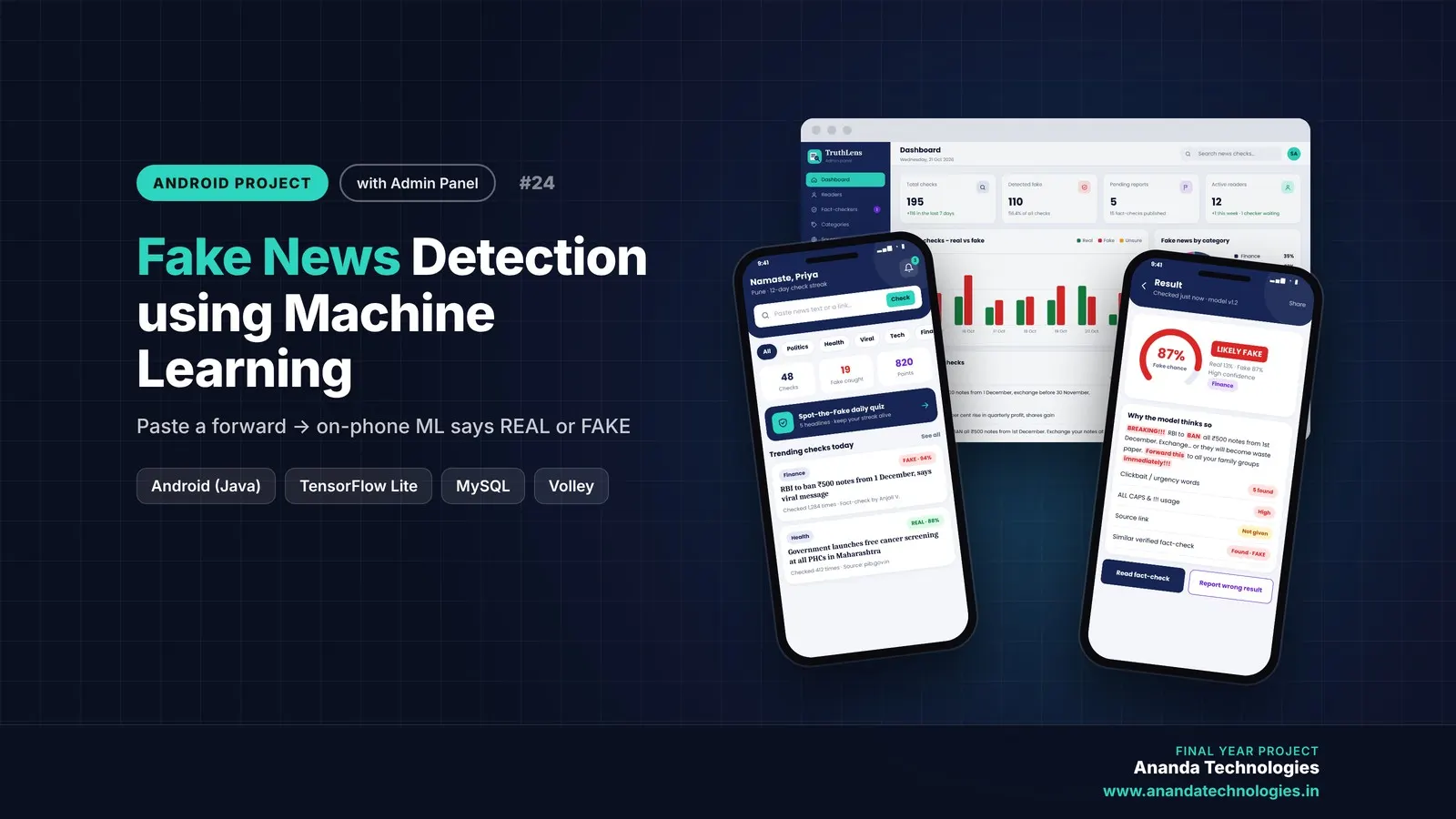
6. Fake News Classification Project
Build an educational machine-learning application that classifies text using a labelled dataset.
Possible features:
- Text input
- Text preprocessing
- Model-based classification
- Confidence or probability display
- Evaluation metrics
Suggested technologies: Python, scikit-learn and natural language processing tools.
A classifier may make mistakes and should not be presented as a definitive fact-checking service. Dataset quality and model evaluation are essential parts of this project.
7. AI-Based Customer Support Assistant
Develop an assistant that answers common customer questions using approved business information.
Possible features:
- Customer chat interface
- FAQ search
- Query categorisation
- Conversation history
- Escalation to a human representative
Suggested technologies: Python or Node.js, a database and optional AI API integration.
This project can demonstrate how AI supports a customer service workflow while allowing unresolved queries to be handled by a human.
8. Image Classification Application
Create an application that classifies images into predefined categories using a trained model.
Possible features:
- Image upload
- Image preprocessing
- Model prediction
- Result display
- Accuracy evaluation
Suggested technologies: Python, TensorFlow or PyTorch and an appropriate dataset.
Choose a manageable dataset and document the model's performance, limitations and possible sources of bias.
9. Intelligent Attendance Analytics
Build an attendance management system that generates reports and analyses attendance patterns.
Possible features:
- Student and subject records
- Attendance percentage calculation
- Monthly reports
- Low-attendance alerts
- Optional trend analysis
Suggested technologies: Java, Kotlin or Python with a suitable database.
Begin with reliable attendance records and reporting. Any advanced predictive feature should be added only when there is enough appropriate data.
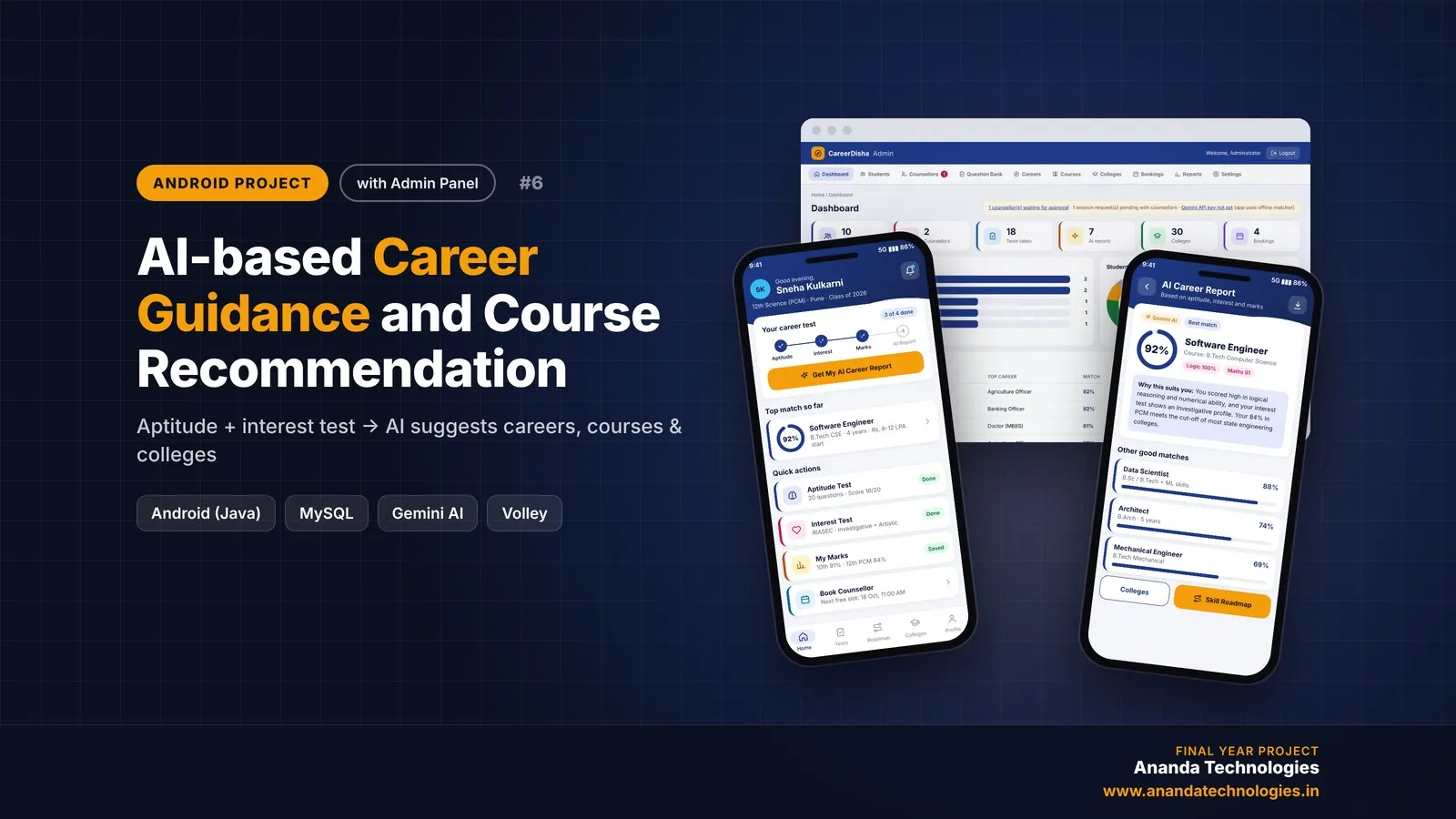
10. AI-Based Career Guidance Assistant
Create a tool that helps students explore career paths based on their interests, skills and learning goals.
Possible features:
- Interest questionnaire
- Skills profile
- Career information
- Suggested learning resources
- Personalised recommendations
Suggested technologies: Python or JavaScript, a database and optional AI integration.
The tool should provide educational guidance, not guarantee employment or make unsupported claims about a student's future.
11. Smart Document Search System
Develop an application that helps users find relevant information across a collection of documents.
Possible features:
- Upload supported documents
- Extract searchable text
- Keyword-based search
- Relevant passage retrieval
- Optional AI-generated summaries
Suggested technologies: Python, document-processing libraries, a database and optional vector search.
Use documents you are authorised to process and apply suitable access controls to private information.
12. AI-Based Agriculture Information Assistant
Build an educational application that presents agriculture-related information from a verified knowledge source.
Possible features:
- Crop information search
- Frequently asked farming questions
- Seasonal information
- Local-language interface
- Links to authoritative resources
Suggested technologies: Python or JavaScript, a database and optional AI integration.
For practical agricultural recommendations, use reliable sources and clearly communicate limitations instead of presenting generated answers as professional advice.
Which AI Project Is Best for Your Course?
The right project depends on your syllabus, programming experience and expected level of implementation.
| Course | Possible project choices | |---|---| | B.Tech Computer Science | Image classification, resume screening, recommendation system | | MCA | AI enquiry assistant, document search, customer support assistant | | BCA | FAQ chatbot, student performance dashboard, basic recommendation system | | B.Sc. Computer Science | Text classification, data analysis, recommendation system | | Diploma / Polytechnic | FAQ chatbot, attendance analytics, basic image classification |
These are suggestions, not fixed course requirements. Confirm the scope and deliverables with your department.
Technologies Used in AI Projects
You do not need to use every AI technology in a single application. Select the tools based on your project objectives.
Python
Python is widely used for data processing, machine learning and AI experimentation.
Machine Learning Libraries
Libraries such as scikit-learn can support classification, clustering and recommendation experiments.
TensorFlow or PyTorch
These frameworks can be useful for projects involving neural networks and image classification.
Databases
MySQL, PostgreSQL, SQLite or other suitable databases can store users, project records and application data.
APIs and Web Technologies
A backend API can connect an AI model to a website or mobile application. An external AI service may be optional, depending on the project.
How to Build an AI Academic Project
Follow a structured development process:
- Define the problem and intended users.
- Identify the data required and confirm that you can use it.
- Choose the programming language and technology stack.
- Build the core application before adding advanced AI features.
- Test the model or logic using suitable examples.
- Measure performance and document limitations.
- Prepare diagrams, screenshots, a project report and a demonstration.
- Review the implementation and ensure you can explain the code during your viva.
A working application with clear objectives and honest evaluation is more valuable than a complicated project whose behaviour you cannot explain.
What Should an AI Final-Year Project Include?
Depending on your institution's requirements, a project may include:
- Problem statement and objectives
- Literature review or background study
- System architecture and module descriptions
- Dataset details and preprocessing steps, if applicable
- Model or algorithm description
- Implementation and test results
- Screenshots and demonstration
- Project report and presentation
- Limitations and future scope
Follow your institution's prescribed format and academic integrity rules.
Explore Academic Projects at Ananda Technologies
Ananda Technologies provides an academic project catalogue for students exploring software and computing project topics.
If you are looking for an AI-related project, browse the available catalogue and review the actual project descriptions, technologies, features and deliverables before choosing a topic.
Explore academic projects: Visit the academic projects section of the Ananda Technologies website and select the project category relevant to your course.
Choose a project that matches your learning goals and make sure you understand its implementation. Available features and deliverables may vary by project.
Frequently Asked Questions
Which AI project is best for final-year students?
An AI enquiry assistant, recommendation system, image classifier or document search system can be a useful choice. The best option depends on your course, available data and technical experience.
Can BCA students build AI projects?
Yes. BCA students can start with an FAQ chatbot, a basic recommendation system or a student performance analysis application. The scope should match their current skills and course requirements.
Which programming language is commonly used for AI projects?
Python is a popular option because of its data-processing and machine-learning ecosystem. Other languages may be appropriate when the project requires a web or mobile application.
Is an AI API compulsory?
No. Some projects can use locally implemented rules or trained models. An external AI API is useful when the project requires a hosted language model or another external AI capability.
Do AI projects require a dataset?
Many machine-learning projects need a suitable dataset. A simple rule-based chatbot or information assistant may instead use a verified knowledge base. Always check data quality and usage permissions.
What should I prepare for an AI project viva?
Understand the problem statement, data sources, algorithms, technology choices, test results, limitations and future scope. Be prepared to demonstrate the application and explain your own implementation.
Conclusion
AI projects can help students develop practical skills in programming, data processing, software design and model evaluation.
Start with a clearly defined problem, select suitable technologies and build a working solution before adding advanced features. Whether you are studying B.Tech, MCA, BCA, B.Sc. Computer Science or Diploma, choose a project that meets your academic requirements and that you can confidently explain and demonstrate.
Frequently asked questions
Which AI project is best for final-year students?
AI enquiry assistants, recommendation systems, image classification and document search systems are useful project options. Choose according to your course, technical skills and academic requirements.
Can BCA students build AI projects?
Yes. BCA students can start with a basic FAQ chatbot, recommendation system or student performance analysis application. The project scope should match their programming knowledge and syllabus.
Which programming language is best for AI projects?
Python is a popular choice for AI and machine learning because it offers libraries for data processing, model development and evaluation. Other languages may be suitable depending on the application.
Do AI projects require a dataset?
Many machine learning projects require a suitable dataset. A rule-based chatbot or information assistant may instead use a verified knowledge base. Always check data quality and usage permissions.
Is an AI API compulsory for a student project?
No. Some projects can use locally implemented algorithms or trained models. An external AI API is optional and depends on the project's requirements.
What should an AI final-year project include?
Depending on college requirements, it may include a problem statement, objectives, system design, implementation, testing, screenshots, source code, project report and presentation.
Are AI projects suitable for Diploma and Polytechnic students?
Yes. Students can consider beginner-friendly projects such as FAQ chatbots, attendance analytics and basic image classification, provided the scope meets their course requirements.
How should students prepare for an AI project viva?
Understand the problem statement, technologies, algorithms, data sources, important modules, test results and limitations. Practise demonstrating the application and explaining your implementation.