Final Year Projects
MSBTE Capstone Project Guide for Computer & IT Students in Pune and Mumbai
What the MSBTE K-scheme Capstone Project (316004) asks for: group size, 150-mark split, report format and a 16-week plan for Computer, IT and AI & ML polytechnic students in Pune and Mumbai.
6 min read · updated
The MSBTE capstone project is the last big practical course of your diploma. If you are a Computer Engineering, Information Technology or AI & ML polytechnic student in Pune or Mumbai, this guide explains what the K-scheme capstone (course code 316004) asks for, how it is marked, what the report must look like, and how to plan the semester so the external viva goes smoothly.
All numbers below are from the official MSBTE K-scheme Sem VI curriculum (approved 4 September 2025, as published for the Computer Engineering, IT and AI & ML programmes). If your batch follows an older scheme, check your own syllabus copy with your department.
What the MSBTE capstone project is (K scheme)
In the K scheme, Capstone Project is a Sem VI course in the "Internship / Project" category. MSBTE describes it as the final assignment where you apply everything learnt in the diploma to a real problem. Sem V already has the 12-week internship, so many students pick a capstone problem they noticed during that internship.
The key rules from the curriculum:
- Groups of 3–4 students under one faculty mentor.
- The problem must relate to your programme (or be interdisciplinary). A study-type project is not advisable — you must build a prototype, working model or software.
- MSBTE asks projects to address national thrust areas such as environment, digitization, automation and sustainability.
- Data must be real and relevant; hypothetical data is not accepted.
- You must keep a project execution diary, checked by your mentor every week.
- At the end you submit one hard copy and one soft copy of the report, plus the soft copy of the project code.
Credits, hours and marks
| Item | K-scheme 316004 |
|---|---|
| Semester | VI |
| Lab learning | 2 hrs/week |
| Self learning | 2 hrs/week |
| Credits | 2 |
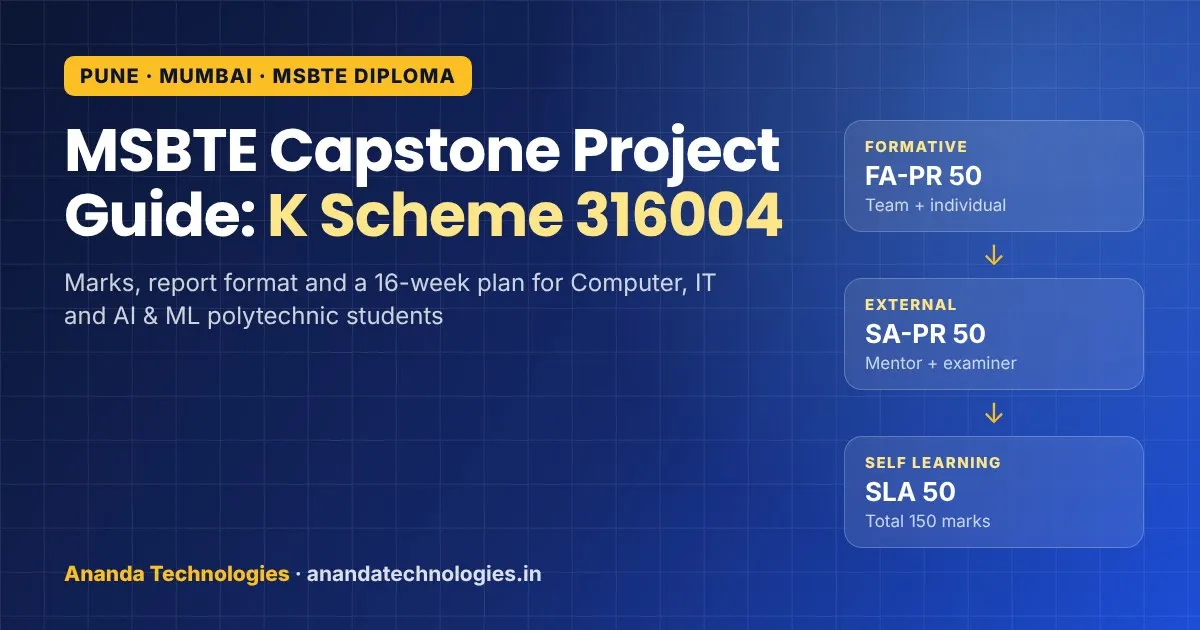
| Formative assessment (FA-PR) | 50 (min 20) |
| Summative assessment (SA-PR, external) | 50 (min 20) |
| Self learning assessment (SLA) | 50 (min 20) |
| Total | 150 |
So the capstone carries 150 marks, and you need at least 20 in each of the three parts. The summative part is done by your faculty mentor together with an external examiner.
How the 50 formative marks are split
Team rubric (30): project selection and problem definition 5, literature survey and data collection 5, design and execution 10, stage-wise progress against the action plan 5, report quality 5.
Individual rubric (20): your contribution as a team member 5, depth of knowledge 10, presentation 5.
That individual part matters. Even in a strong group, a student who cannot explain the module they built loses marks.
How the 50 external marks are split
Five criteria of 10 marks each: completion as per plan, requirement analysis and design, developing the solution with justification and teamwork, report writing, and presentation. MSBTE's note adds that examiners may also look at innovativeness, technology used, user friendliness, cost effectiveness and benefit to society.
Report format MSBTE gives
The curriculum gives a suggested format. Your department may adjust it, so confirm with your guide.
- A4, typed in English, Times New Roman 12 pt; section headings 12 pt bold capitals; chapter names 14 pt capitals; text justified.
- One side print, double spacing, margins 3.5 cm left, 2.5 cm top, 1.25 cm right and bottom.
- Hard-bound or spiral-bound with a black cover showing names, diploma department, year and institute.
- Order: cover page, title page, guide's certificate, acknowledgement, one-page abstract, contents.
- Chapters: 1 Introduction, 2 Literature Survey, 3 Scope, 4 Methodology / Approach, 5 Designs, working and processes, 6 Results and Applications — then Conclusion and References (numbered in square brackets, in the order used).
MSBTE also says the report should mention tools and technology only briefly and focus on the work itself. For a software project that means screenshots, flow, database design and test results — not five pages copied about "What is PHP". For more detail on degree-level report formats, see our SPPU project report format guide and the Mumbai University black book format; the chapter logic is similar.
A semester plan that works
Sem VI also has Management, Emerging Trends, Software Testing, Client Side Scripting, Mobile Application Development and an elective (Machine Learning, NIS or Digital Forensics for Computer Engineering). The capstone time is only 2 + 2 hours a week, so start early.
- Weeks 1–2: Shortlist 3 problems from your internship, college or local area. Write a one-page synopsis for each and finalise one with your mentor. Start the diary.
- Weeks 3–4: Literature survey (existing apps, 5–10 references), feasibility, requirement list, team roles.
- Weeks 5–7: Design — use case, DFD / flow, ER diagram, screen sketches. Freeze the module list.
- Weeks 8–12: Build module by module. Show progress to your mentor every week and note it in the diary.
- Weeks 13–14: Testing (you are studying Software Testing in the same semester — reuse those test-case formats), bug fixing, results.
- Weeks 15–16: Report, PPT, and practice the presentation. Every member should be able to run the project and answer questions on any screen.
Choosing a software capstone that scores well
For Computer and IT students, a web or Android system that solves a small real problem is the safest choice. It fits "digitization", it is easy to demonstrate, and every member can own a module. Good signs of a strong topic:
- a real user (a shop, NGO, college office, society),
- at least 3 roles (user, staff, admin),
- data you can actually collect,
- one feature that is a little beyond CRUD — QR passes, OTP checks, a report dashboard or a simple recommendation.
Some examples from our catalogue that match these points (each has a free abstract, screenshots and a report preview you can check):
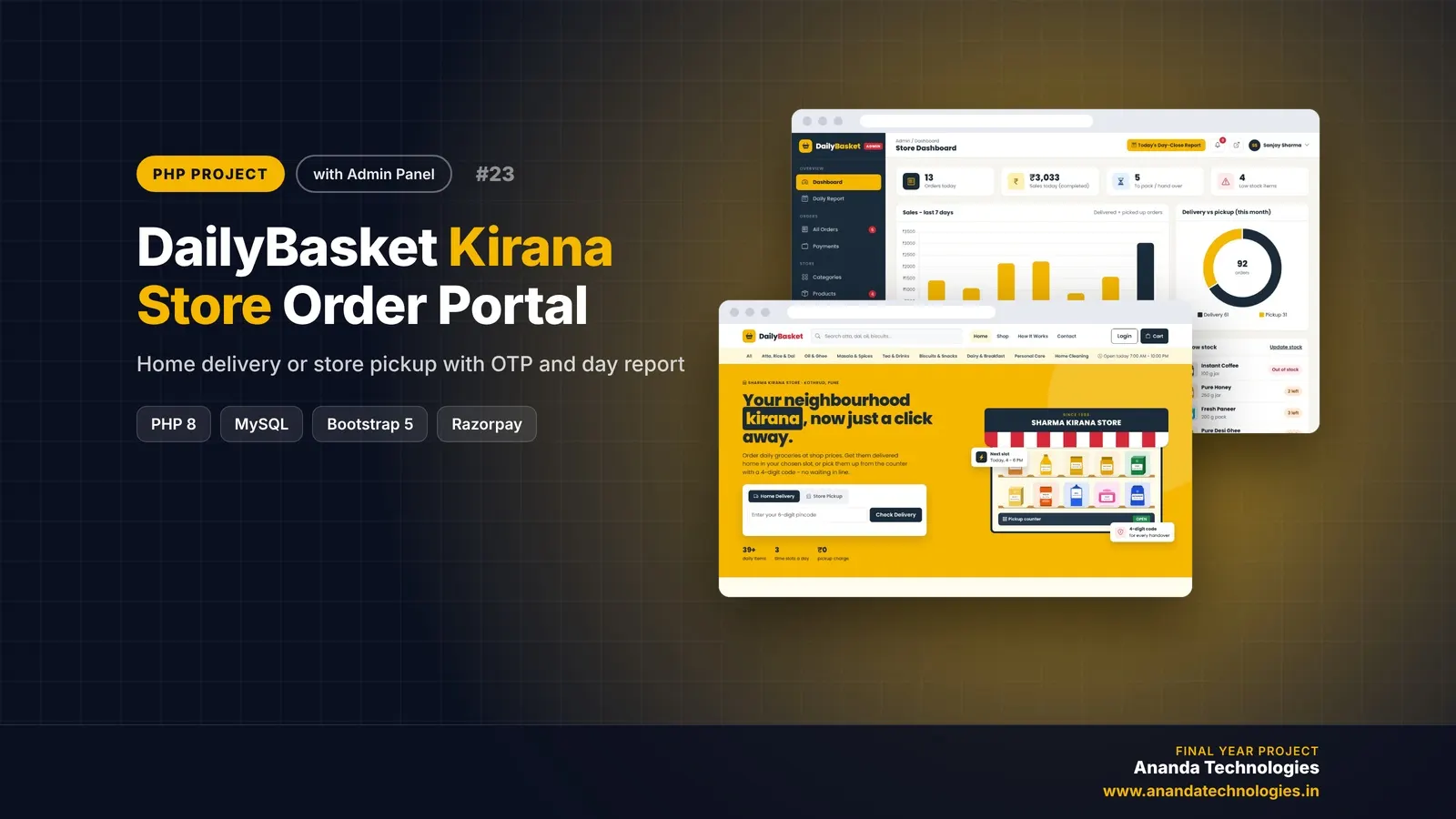
- Kirana store order system — digitizing a local shop with delivery OTP and a day report.
- Old book exchange portal — a sustainability theme with deal slips and a shop panel.
- NGO donation system — pickup requests, goal meter and QR certificate.
- Volunteer portal — events with roles, QR check-in and certificate verification.
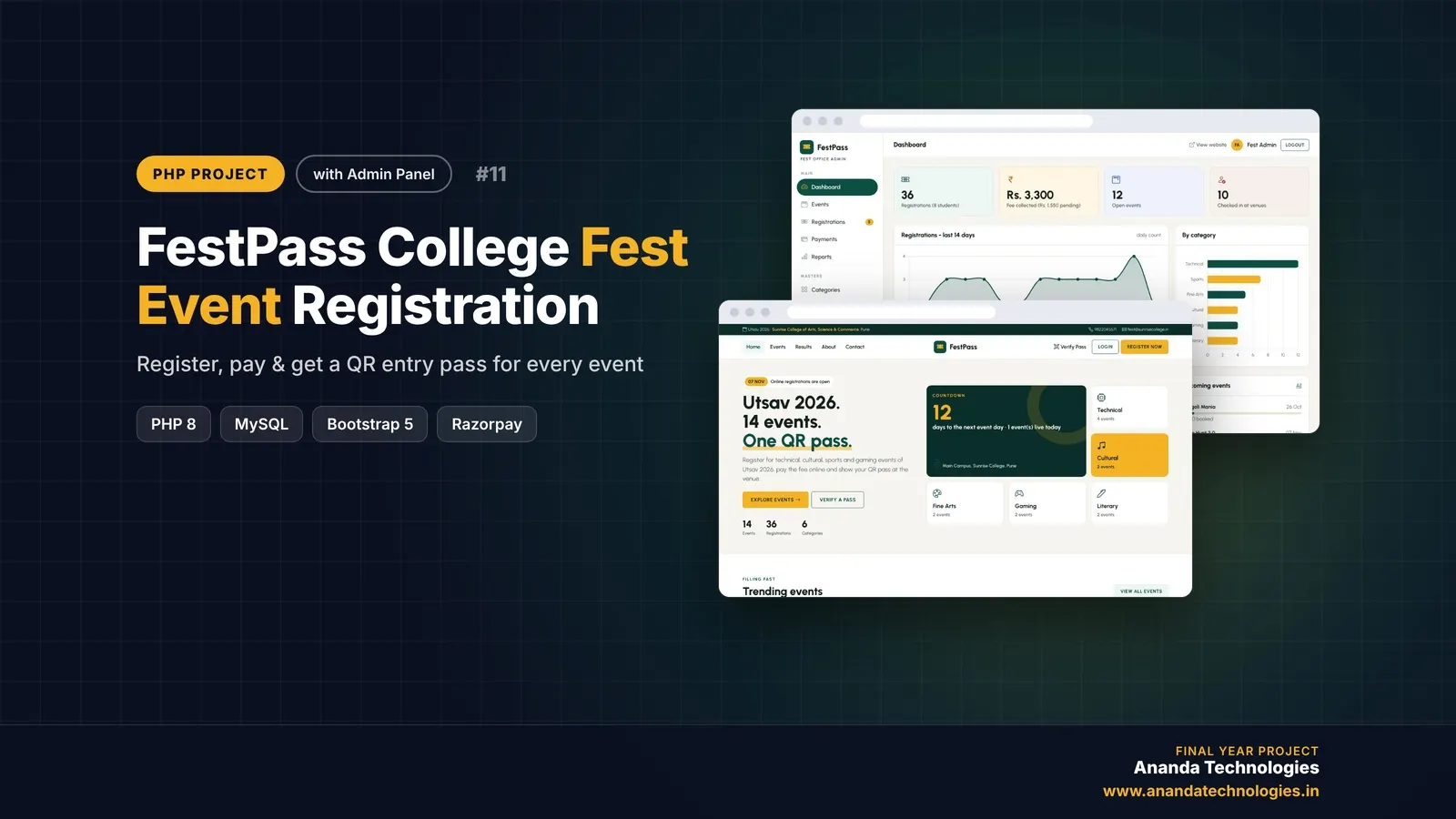
- College fest event registration system — team registration and QR entry passes for your own college.
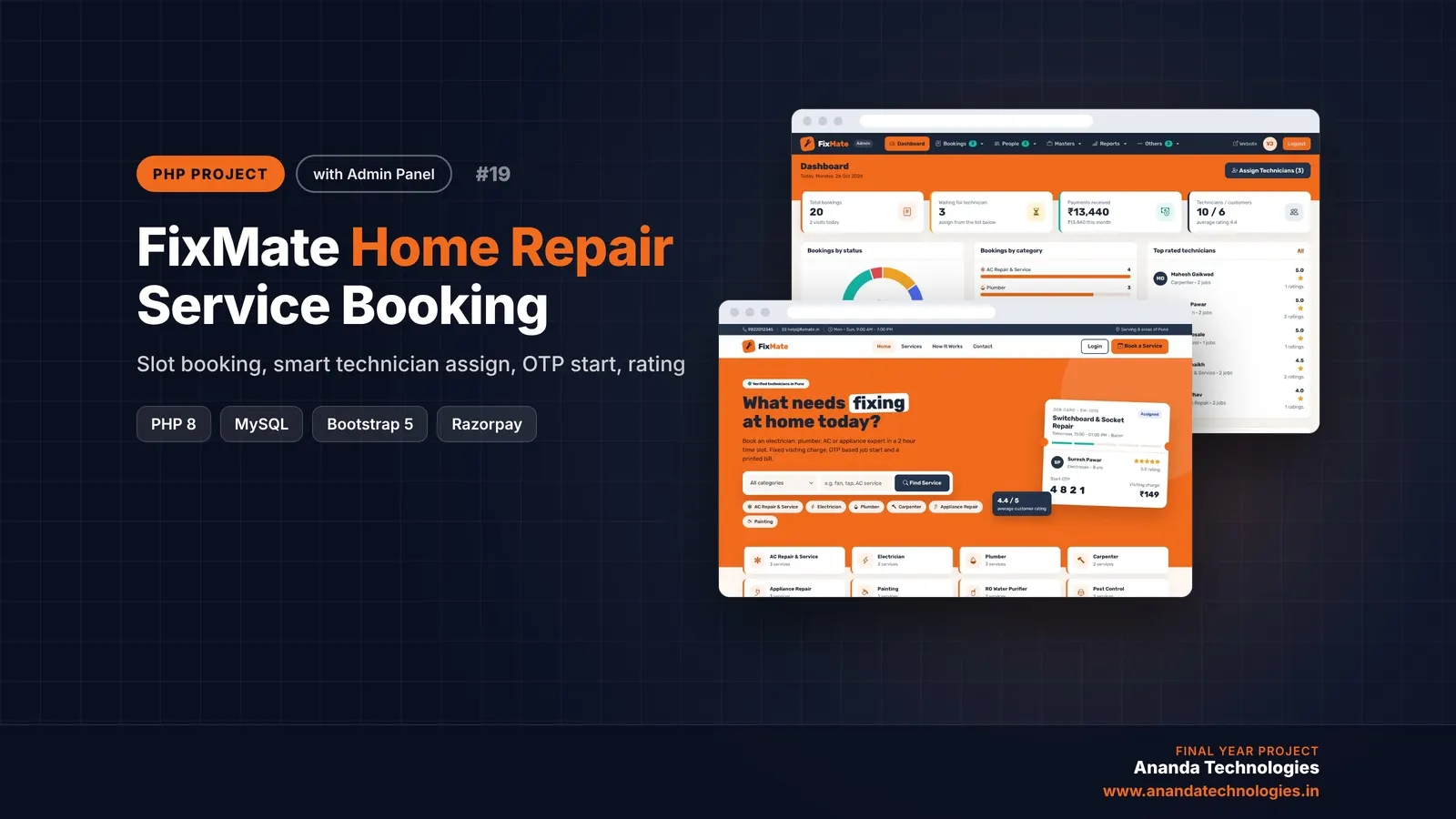
- Home repair service booking — slot booking and technician assignment.
If your group knows Android well (MAD is a Sem VI course anyway), an Android front end with a PHP/MySQL backend is also a good fit. You can browse more ideas on the diploma projects page.
Common mistakes in the external
- Only one member knows the code. The individual rubric and the "teamwork" criterion both catch this.
- No diary entries, or all entries written in the last week.
- Dummy data everywhere, although the curriculum asks for realistic data.
- Report chapters that do not match the actual project, or a missing guide's certificate.
- The project runs only on one laptop. Keep a working copy on a pen drive and the soft copy ready, as you have to submit it anyway.
Help for Pune and Mumbai polytechnic students
If you study in a polytechnic in Pune, Pimpri-Chinchwad, Mumbai, Thane or Navi Mumbai and want a ready base project or guidance on report and viva preparation, see our pages for final year projects in Pune and final year projects in Mumbai. You can check the abstract, screenshots and report preview of any project before deciding, and still build and understand your own module — which is what MSBTE marks you on.
Frequently asked questions
How many marks is the MSBTE capstone project in the K scheme?
The K-scheme Capstone Project (316004) in Sem VI carries 150 marks: 50 formative practical marks, 50 summative practical marks assessed with an external examiner, and 50 self learning marks. You need at least 20 in each part. It is worth 2 credits.
How many students can be in one MSBTE capstone project group?
The curriculum says the project must be assigned to a group of 3–4 students under an identified faculty mentor. Your mentor may also give each member a role such as data collection, development, testing or project management.
Can we do a study-type or report-only capstone project?
MSBTE says a study-type project is not advisable. You are expected to prepare a prototype, working model or software and the report at the same time, and submit the soft copy of the project code with the report.
What font and margins does MSBTE suggest for the capstone report?
The suggested format is A4, Times New Roman 12 pt, chapter names 14 pt capitals, justified text, one side print with double spacing, and margins of 3.5 cm left, 2.5 cm top and 1.25 cm right and bottom, with a black hard-bound or spiral-bound cover. Confirm any changes with your department.