Final Year Projects
Final Year Project Viva Questions for Computer & IT Students (Pune, Mumbai)
The final year project viva questions SPPU, Mumbai University and MSBTE examiners ask Computer and IT students — design, AI/ML, testing, demo and contribution — with a 7-day preparation plan.
6 min read · updated
These final year project viva questions are the ones Computer and IT students in Pune and Mumbai hear again and again at the external oral — whether you are in BE/BTech, MCA, BCA, BSc IT or an MSBTE diploma. The viva is short, often 10–15 minutes for the whole group, but it decides a big part of your project marks. The good news: examiners ask from a small, predictable set of areas. If you prepare those areas honestly, the viva becomes a conversation about work you already did.
How the project oral is marked
Your exact marks depend on your university, course and batch, so always check your own syllabus. As examples from the official syllabus documents:
| University / board | Final project course | Oral / external part |
|---|---|---|
| SPPU BE Computer (2019 course) | 410256 Project Stage II, 6 credits | Term Work 100 + Oral 50 |
| Mumbai University BE Computer (Rev-2019 'C' scheme) | CSP801 Major Project 2, 6 credits | Term Work 100 + Oral & Practical 50 |
| MSBTE K-scheme Sem VI (Computer / IT / AI & ML) | 316004 Capstone Project, 2 credits | SA-PR 50 (external practical assessment) |
Mumbai University's syllabus even lists the "suggested quality evaluation parameters" for the Major Project 2 oral: relevance to the specialization or industry trends, modern tools used, innovation, quality and completeness of work, validation of results, impact and business value, quality of written and oral presentation, and individual as well as team work. SPPU and MSBTE examiners look at very similar things. So the questions below are grouped around these points.
1. Problem and objective questions
Examiners almost always start here. They want to see that you understand why the project exists.
- What problem does your project solve, and who is the user?
- Why did you choose this topic? What is new in it compared to existing apps or websites?
- What are your objectives? Did you achieve all of them?
- What is the scope — what does your system not do?
Tip: Prepare a 60-second answer that covers problem → users → solution → result. One member should give it, clearly, without reading from the slide.
2. Literature survey and existing system
- Which papers or existing systems did you study? What was their limitation?
- How is your approach different from paper X in your survey?
- Why did you not use method Y instead?
If your report cites 10 papers, be ready to explain at least three of them in simple words. Examiners notice quickly when a group has copied a survey table without reading it.
3. Design and architecture questions
This is where Computer and IT examiners spend the most time.
- Explain your system architecture / block diagram.
- Show the ER diagram. Why is this table separate? What is the primary key here?
- Explain one use case diagram, one sequence diagram and the data flow (DFD level 0 and 1).
- How does the Android app (or web front end) talk to the server? REST API, JSON, which methods?
- How do you store passwords? (Answer: hashed — e.g. PHP
password_hash()— never plain text.) - What happens if two users book the same slot at the same time?
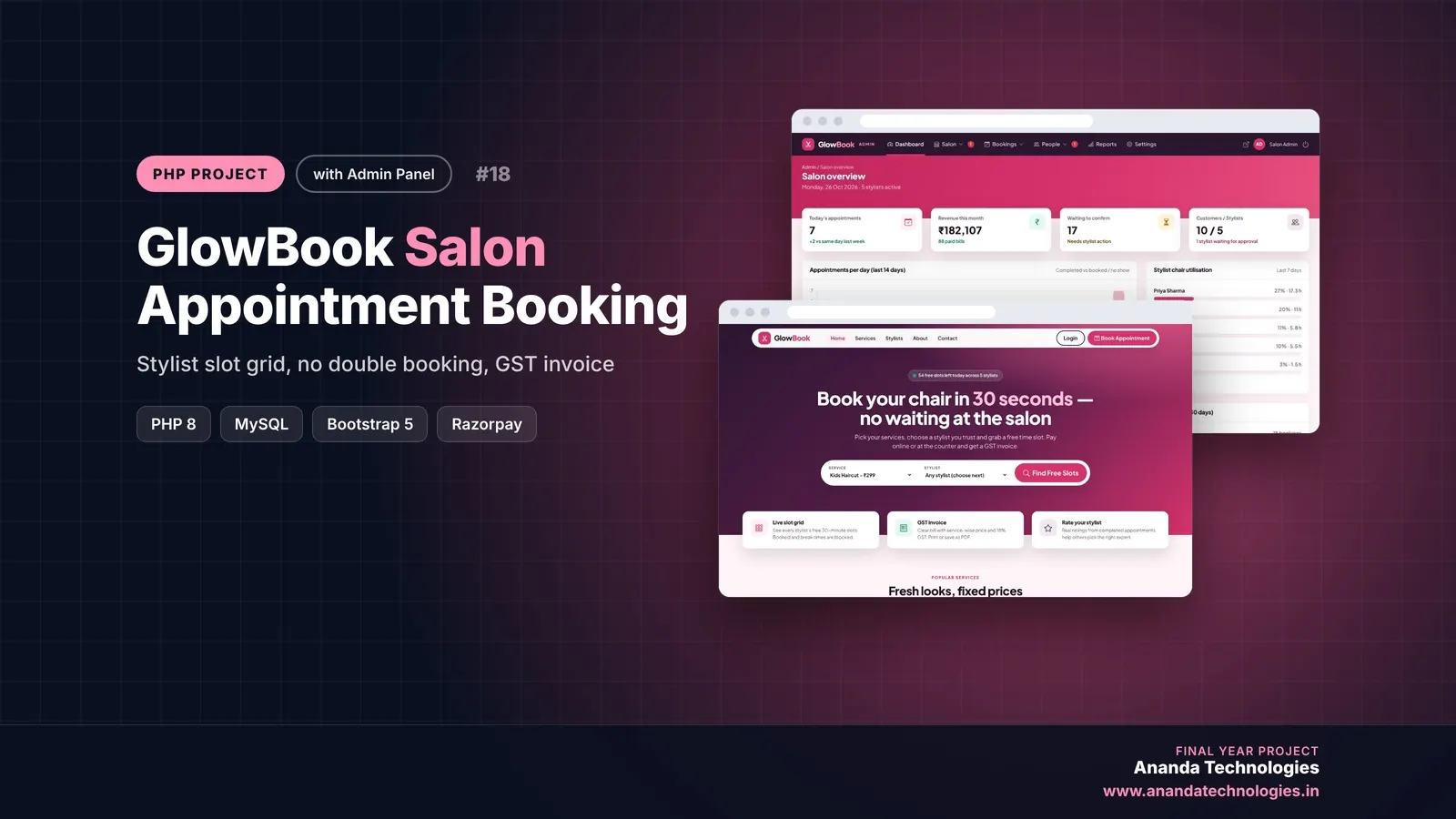
For PHP + MySQL projects such as a salon appointment booking system or a tour package booking system, expect questions on sessions, SQL joins, prepared statements (SQL injection) and how the admin panel controls the data.
4. Technology and tools questions
- Why PHP / Java / Python and not another language?
- Which database and why? What is normalization? Is your database in 3NF?
- Which IDE, libraries and APIs did you use? Which version?
- Where is your project hosted, or how did you run it locally (XAMPP, Android Studio emulator)?
Don't name a tool you can't explain. If the report says "Firebase", "TensorFlow Lite" or "Gemini API", one member must be able to explain what it does in your project.
5. Algorithm and AI / ML questions
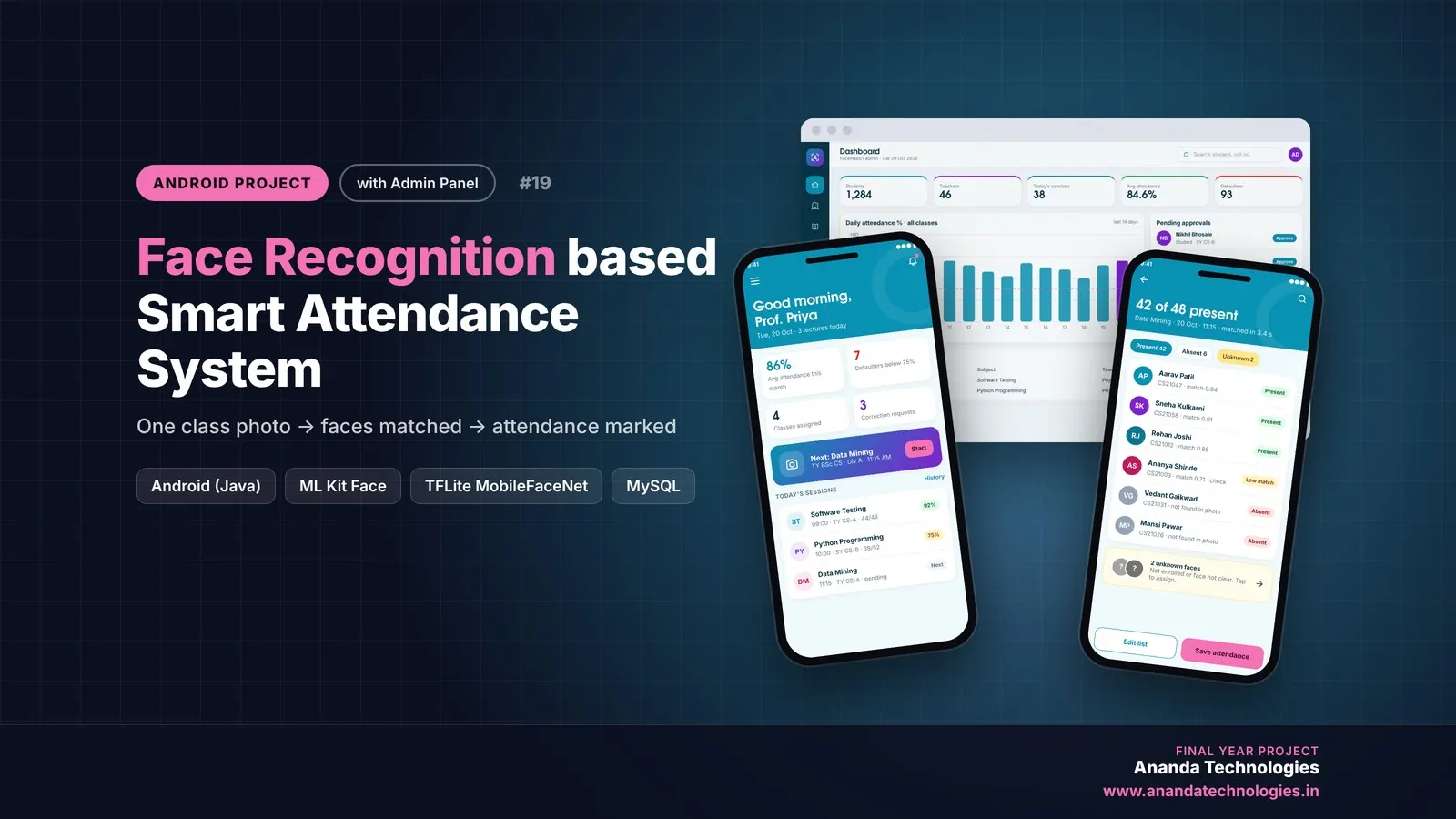
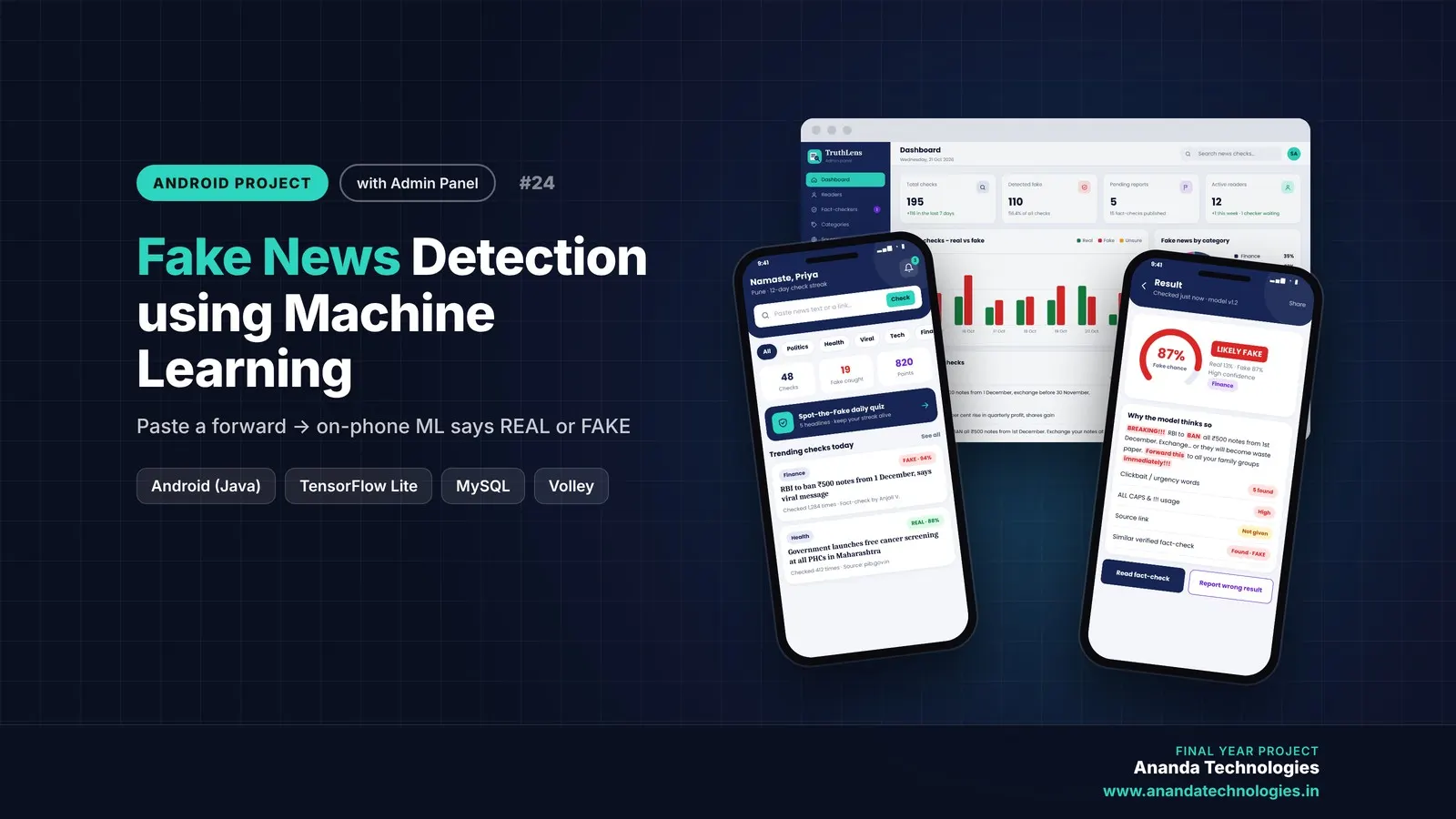
For AI and ML projects — for example fake news detection using machine learning or a face recognition based attendance system — this part is the heart of the viva.
- Which algorithm / model did you use and why? What were the alternatives?
- Which dataset? How many records, how many classes? How did you split train and test?
- What is your accuracy? What are precision, recall and F1-score? Show the confusion matrix.
- What is overfitting and how did you avoid it?
- Does the model run on the phone or on a server?
Only quote numbers you actually got in your own testing, and keep the result screenshots ready. A smaller honest accuracy is safer than a big number you can't reproduce in front of the examiner.
6. Testing and results
- What test cases did you write? Show two of them — one pass, one fail-and-fix.
- What is the difference between unit, integration and system testing?
- How did you validate your results? Did real users try the system?
Mumbai University explicitly lists "validation of results" as an evaluation parameter, and SPPU's Stage II guidelines ask for testing and results with data tables. Keep a results chapter with tables and graphs, not just screenshots.
7. Live demonstration questions
Most examiners will ask you to run the project. Common requests:
- "Register a new user and show me the admin side."
- "Enter wrong data — what does the system do?" (Validation messages matter.)
- "Change this in the code and run it again."
- "Open the database table where this record went."
For an exam-type project like an online examination app with smart proctoring, be ready to show an exam being created, attempted and evaluated end to end. Keep the laptop charged, XAMPP / emulator started before your turn, and an offline copy of any demo data.
8. Individual contribution questions
Every examiner checks this, because marks are individual.
- What exactly did you do in this project?
- Explain this module / function you wrote, line by line.
- If your teammate is absent, can you explain their module?
Divide the work clearly (front end, back end, database, testing/report), but make sure every member can explain the full flow of the system.
9. Future scope and impact
- What are the limitations of your system?
- What would you add if you had six more months?
- Can this be used by a real business or college? What would it cost to run?
Simple, practical answers work best: "add online payment", "add a mobile app for the admin", "train on a larger dataset", "deploy on cloud hosting".
A 7-day viva preparation plan
| Day | What to do |
|---|---|
| 1 | Re-read your own report fully; mark every term you can't explain |
| 2 | Practice the 60-second project summary, each member once |
| 3 | Revise ER diagram, DFD, UML and the database tables |
| 4 | Revise algorithm / model, dataset and result numbers |
| 5 | Full mock demo on the exam laptop, including error cases |
| 6 | Mock viva — each member asks the others 10 questions from this list |
| 7 | Print/arrange report, workbook or diary, PPT, and a backup of the code on a pen drive |
Format of the report also matters on viva day — see our guides on the SPPU project report format and the Mumbai University black book format. Diploma students can read the MSBTE capstone project guide.
Need a project you can explain confidently?
If you are still choosing a topic, pick one you can understand fully, not just one that sounds big. Simple, well-built systems like a photography studio booking system or a second-hand furniture marketplace are easy to explain module by module. Every project on our site comes with a free abstract, screenshots and a report preview, so you can check it before deciding.
Students from Pune can browse final year projects in Pune, and Mumbai students can see final year projects in Mumbai. You can also browse by course: BE/BTech projects, MCA projects and diploma projects.
Frequently asked questions
What questions are asked in a final year project viva?
Most examiners ask about the problem and objectives, the literature survey, system design (architecture, ER diagram, UML, DFD), the tools and technology used, the algorithm or model and its results, testing, a live demo, each member's own contribution, and future scope.
How many marks is the final year project oral in SPPU and Mumbai University?
For example, SPPU BE Computer (2019 course) Project Stage II has Term Work 100 + Oral 50, and Mumbai University BE Computer Major Project 2 (Rev-2019) has Term Work 100 + Oral & Practical 50. Marks differ by course and batch, so always check your own syllabus.
Does every group member have to answer in the viva?
Yes. Viva marks are individual, so examiners ask each member what they built and may ask you to explain your own module or code line by line. Every member should also understand the full flow of the system.
How should I prepare for the project viva in one week?
Re-read your report, practise a 60-second project summary, revise diagrams and database tables, revise your algorithm and result numbers, run a full mock demo on the exam laptop, and hold a mock viva within your group.